Augustalis of Frederick II – Gold Coin of the Holy Roman Emperor
20,00Kč
Augustalis of Frederick II – Gold Coin of the Holy Roman Emperor
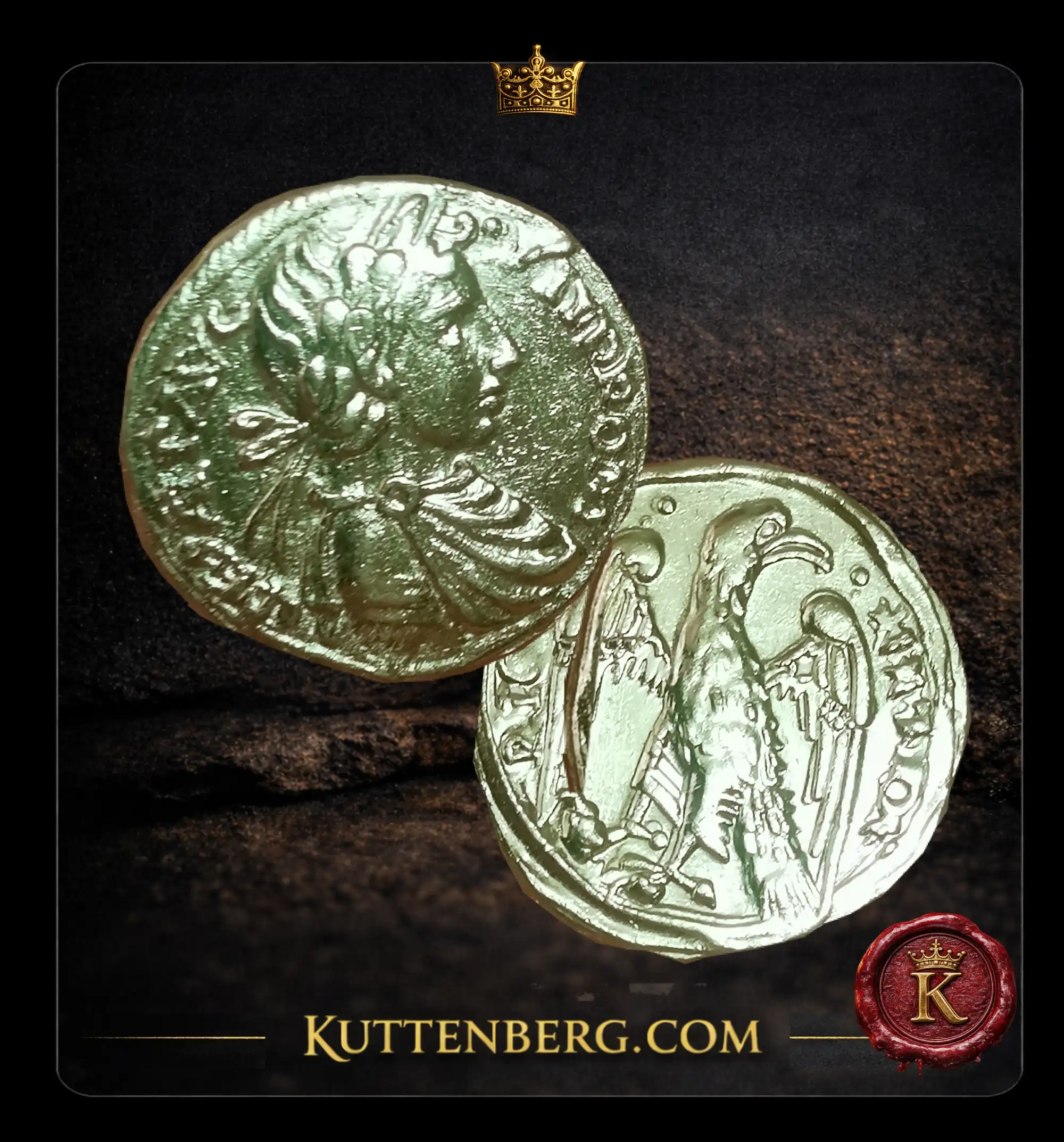
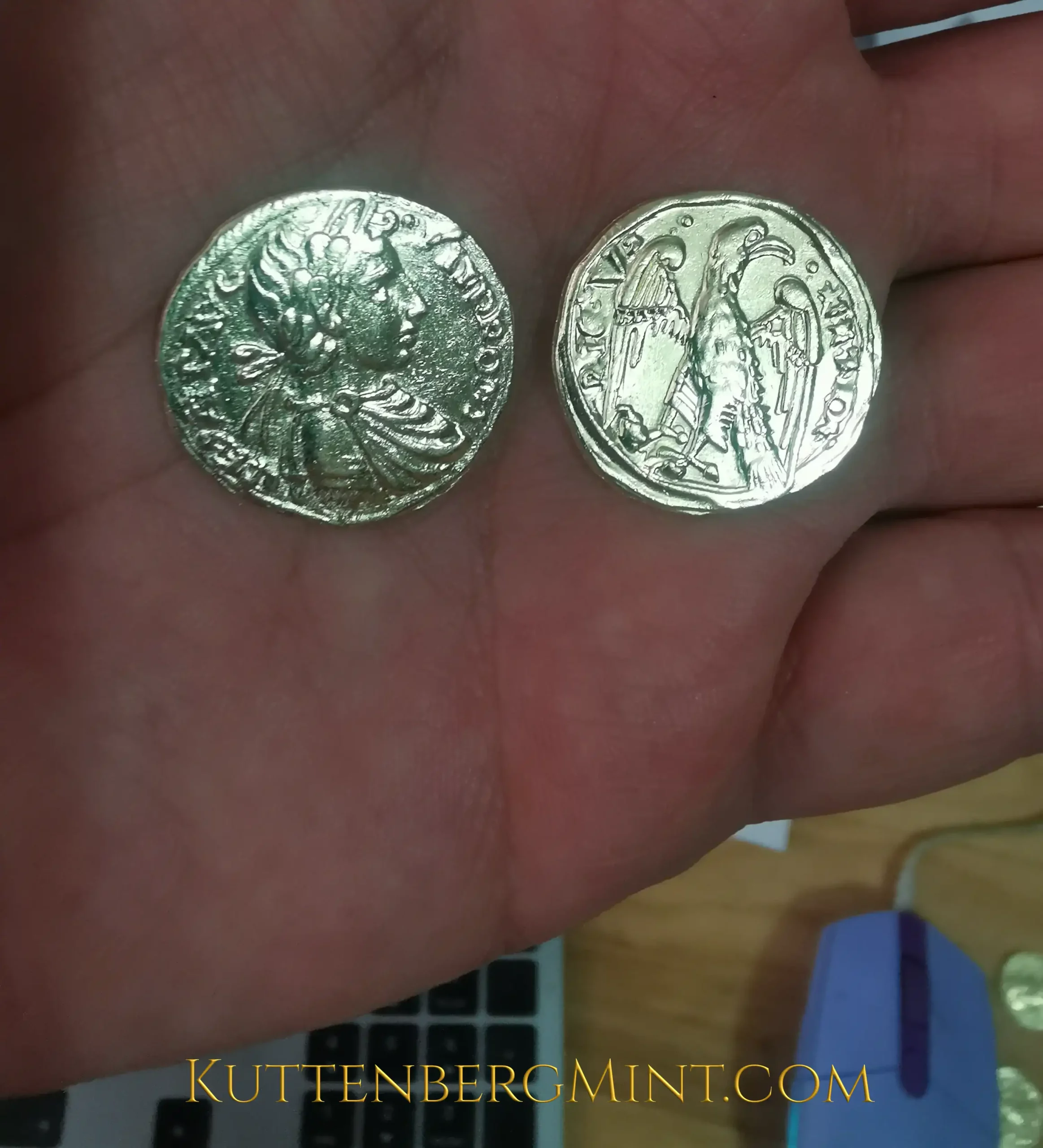
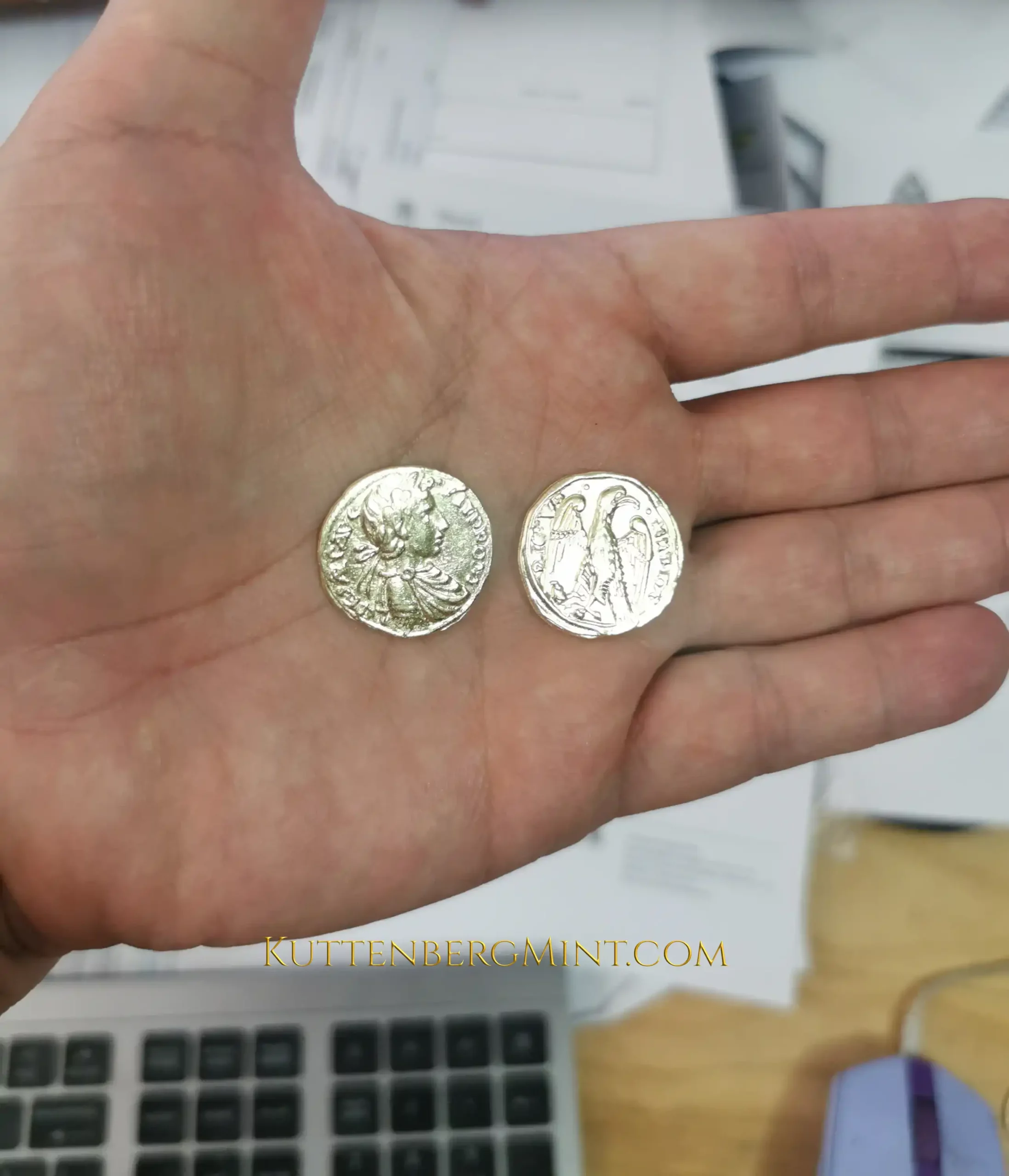
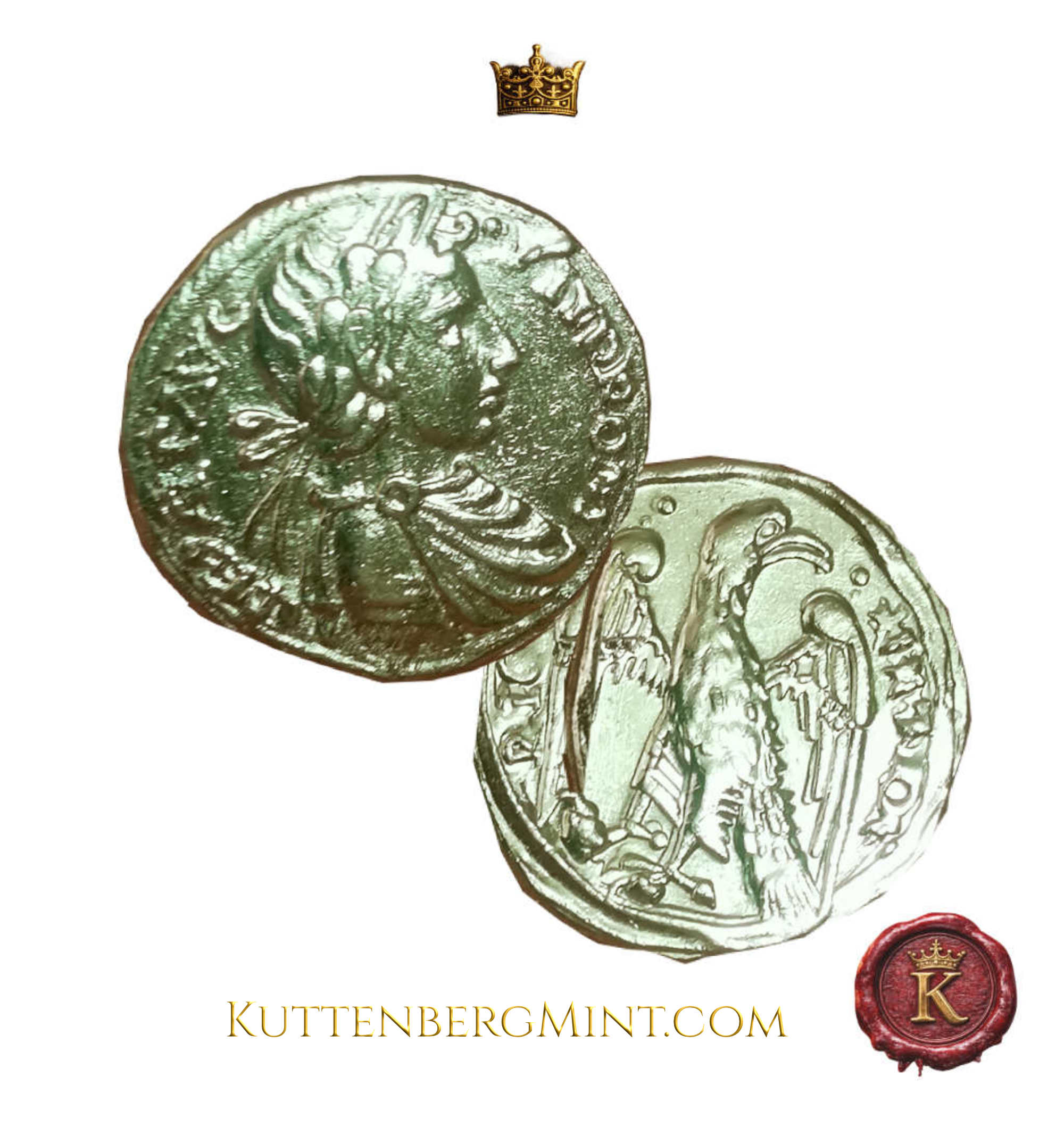
One of the most famous medieval coins in Europe. The Augustalis of Emperor Frederick II was minted in 13th-century Sicily and is still considered one of the masterpieces of medieval coinage. The obverse bears the portrait of the emperor in an antique Roman style, while the reverse shows a majestic eagle – symbol of empire, power, and imperial authority.
Why Buy This Coin?
The Augustalis is one of the most beautiful and historically significant coins of the Middle Ages.
Unlike many medieval coins, it was deliberately designed to resemble the money of Ancient Rome. Holding it feels less like carrying currency and more like carrying a piece of imperial history.
Whether you are building a fantasy world, creating a historical costume, running a tabletop campaign, or collecting unusual coins, the Augustalis stands out as a symbol of knowledge, power, and ambition.
Who Is This Coin For?
This coin is perfect for:
- LARP characters such as emperors, nobles, diplomats, scholars, and powerful mages
- RPG players looking for realistic treasure and immersive props
- Historical reenactors and medieval enthusiasts
- Collectors of medieval and ancient-inspired coinage
- Writers, worldbuilders, and fantasy creators
If your character commands armies, studies forbidden knowledge, negotiates treaties, or advises kings, this is the coin that belongs in their purse.
Coin Properties
- Diameter: 23 mm
- Material: zinc alloy
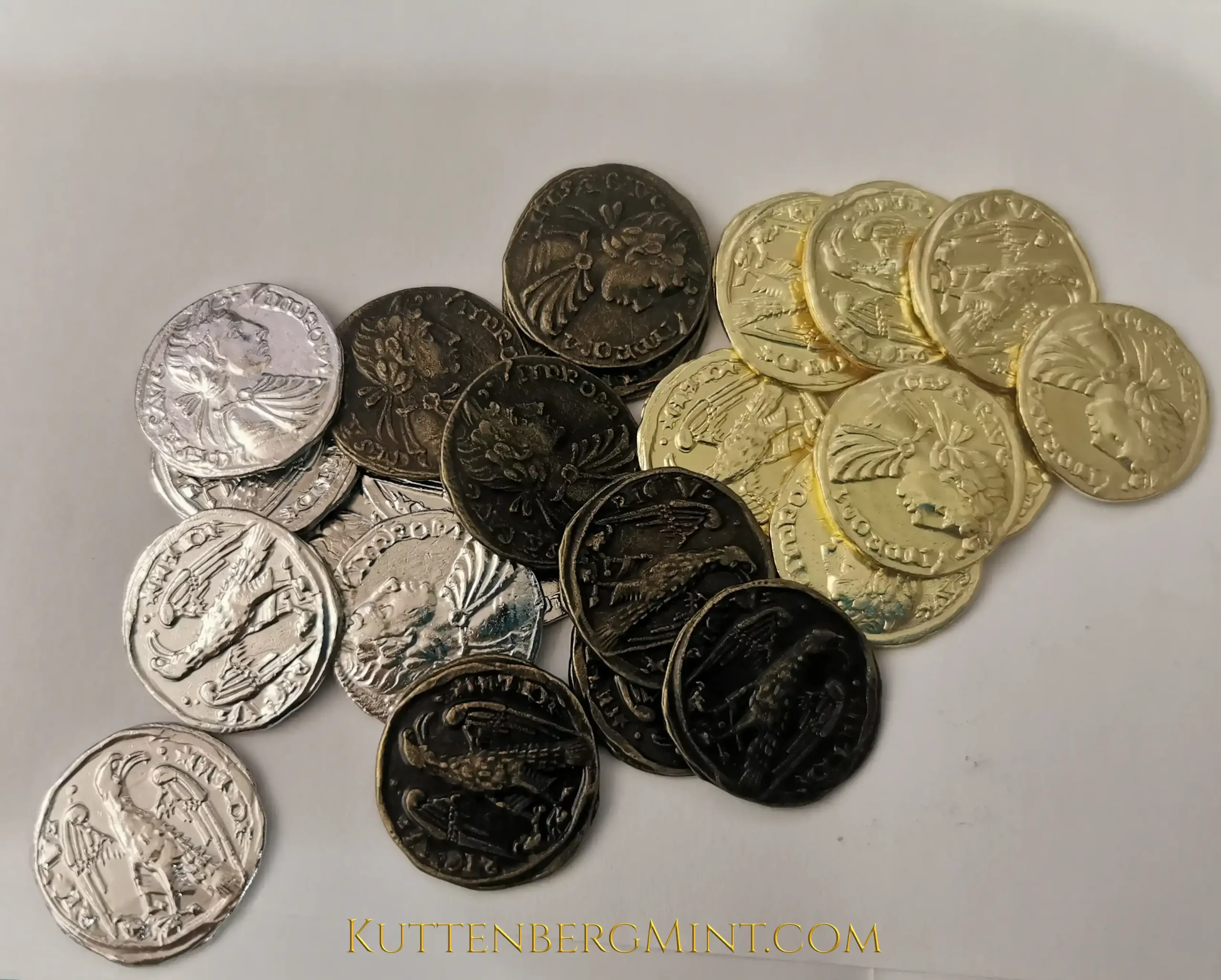
- Available finishes: Gold / Antique Gold / Silver
- Style: historical medieval coin replica
- Suitable for: LARP, RPG, cosplay, reenactment, collections
Augustalis of Frederick II – Gold Coin of the Holy Roman Emperor
One of the most famous medieval coins in Europe. The Augustalis of Emperor Frederick II was minted in 13th-century Sicily and is still considered one of the masterpieces of medieval coinage. The obverse bears the portrait of the emperor in an antique Roman style, while the reverse shows a majestic eagle – symbol of empire, power, and imperial authority.
Our replica is based on the historical original, with a strong emphasis on authenticity and historical atmosphere. Perfect for LARP, RPGs, reenactment, historical games, collectors, and immersive fantasy worlds.
A symbol of power, knowledge, and Mediterranean luxury. A coin made for archmages, diplomats, scheming nobles, and those who shape history from the shadows.
The Augustalis and its History
The Augustalis, minted in Sicily, is a true numismatic treasure. Emperor Frederick II (who often styled himself Federico) was one of the most educated rulers of the Middle Ages, known as Stupor Mundi – the Wonder of the World. Through this coin, he consciously connected himself to the legacy of ancient Rome. That is why the coin looks almost entirely Roman: the emperor in classical robes and the imperial eagle.
It became the prestigious currency of elites, intellectuals, merchants, and the wealthiest courts of the Mediterranean world.
Purchasing Power of a Single Augustalis
Luxury and Exotic Goods:
A sack of rare spices such as pepper or saffron imported from the East through Sicily – commodities once valued almost like gold itself. You could also buy barrels of fine southern wine or enough high-quality parchment to copy an entire book.
Lives and Loyalty:
The annual salary of a university professor in Bologna or a month’s wage for an elite Saracen bodyguard serving the emperor.
Intrigue and Politics:
This was the kind of coin used to finance crusades, palace conspiracies, and bribes for cardinals in Rome.
The Golden Currency of the Wonder of the World
With coins like these, Frederick II built his stone mysteries. Augustales paid the elite Arab guard of Lucera, warriors loyal only to the emperor and immune to papal excommunication. Scholars, astrologers, and legendary thinkers such as Michael Scot were rewarded in gold like this for translating ancient Arabic works and advising the emperor on astronomy, geometry, and philosophy.
The famous octagonal castle Castel del Monte still carries traces of this fascination with mathematics and the stars.
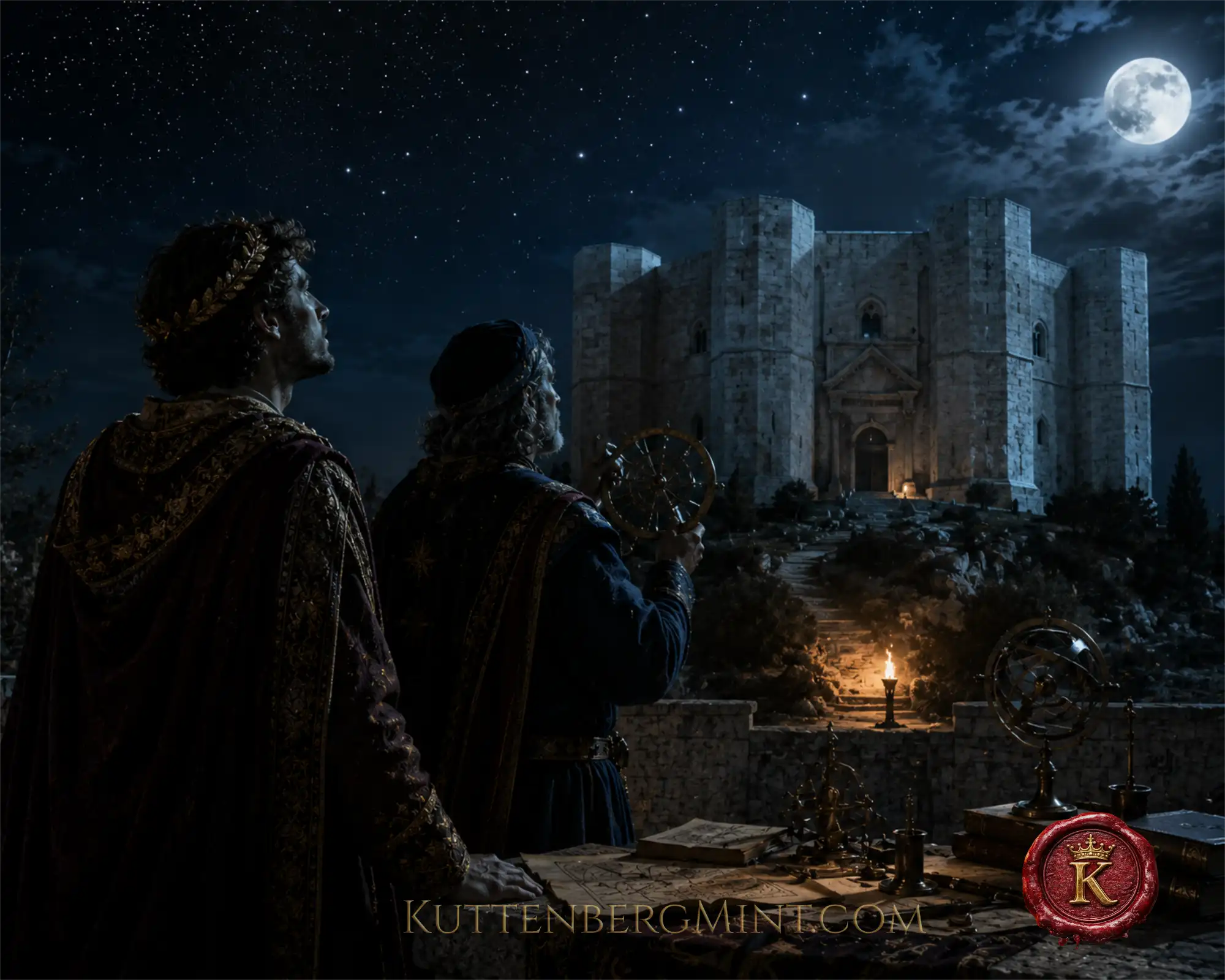
Castel del Monte, Lucera and the Gold of Frederick II
Few medieval rulers left such a lasting impression as Emperor Frederick II (1194–1250), known to his contemporaries as Stupor Mundi – the Wonder of the World. Scholar, diplomat, crusader, falconer, and ruler of Sicily and the Holy Roman Empire, Frederick surrounded himself with mathematicians, astronomers, translators, and philosophers from across the Mediterranean.
His most famous coin was the Augustalis, a gold currency minted in Sicily and designed to evoke the glory of ancient Rome. Unlike most medieval coins, it featured a realistic imperial portrait and a Roman eagle, openly linking Frederick to the Caesars.
How Much Did Castel del Monte Cost?
One of Frederick’s most famous projects was Castel del Monte, the remarkable octagonal castle that still dominates the hills of Apulia.
The exact cost is unknown because many royal records were destroyed during the Second World War. Surviving documents from 1239–1240, however, reveal that Frederick personally ordered funds for stone, lime, and craftsmen working on what was then called Castrum Sancti Angeli de Monte.
Master stonemasons and architects earned roughly half to one Augustalis per week, while ordinary laborers received much smaller wages in silver coinage. Modern estimates suggest that the construction of Castel del Monte may have required around 20,000 Augustales over the course of the project.
The Muslim Guard of Lucera
Unlike many medieval rulers, Frederick trusted neither rebellious nobles nor the papacy. Instead, he established a loyal military colony in Lucera, where thousands of Sicilian Muslims were resettled.
From this community came the emperor’s elite archers and cavalry. These soldiers were generously paid and depended directly on the imperial treasury, making them among Frederick’s most loyal followers.
An elite archer or light cavalryman could earn roughly one to two Augustales per month, along with food, housing, and other benefits. Senior commanders received annual pensions worth hundreds of Augustales and grants of land.
Michael Scot and the Emperor’s Court
Among the most famous scholars at Frederick’s court was Michael Scot (c. 1175–1232), a Scottish mathematician, astrologer, physician, and translator.
Although he died before Castel del Monte was built, many historians believe that the intellectual atmosphere he helped create influenced the castle’s design. Its octagonal geometry, astronomical alignments, and mathematical symbolism reflect ideas that fascinated both Frederick and the scholars around him.
At Frederick’s court, knowledge was rewarded generously. Scholars received pensions, church benefices, housing, assistants, manuscripts, and direct gifts from the emperor.
In many ways, the Augustalis became more than a coin. It was the golden currency of one of the most extraordinary courts in medieval Europe.
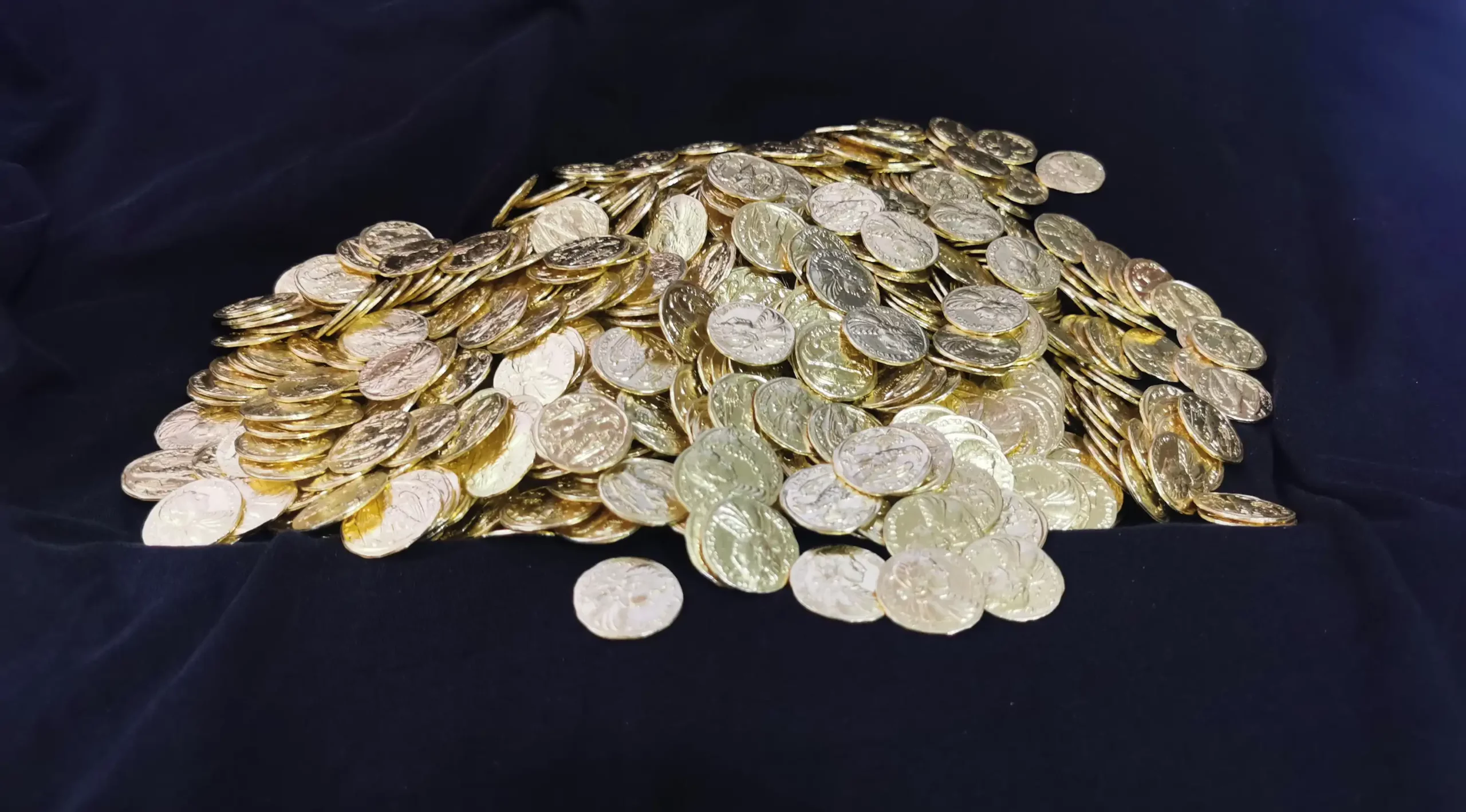
What Could 1,000 Augustales Buy?
A thousand Augustales represented more than 5 kilograms of gold – an immense fortune in the 13th century.
In medieval England, a chest containing 1,000 Augustales would have attracted the attention of kings, bishops, and powerful nobles alike. Such wealth could transform a minor lord into a major political player and open doors to the highest circles of the realm.
With such a fortune, you could:
- finance a company of knights and longbowmen for an entire campaign season,
- build or greatly expand a fortified manor or stone castle,
- outfit several merchant ships trading wool, wine, and luxury goods across the Channel,
- purchase estates, villages, and valuable rights to collect taxes and tolls,
- become one of the wealthiest and most influential men in your county.
A Sicilian Fortune in Medieval England
Gold was far rarer in England than silver. While English commerce flourished through wool exports and silver coinage, a treasure of Sicilian gold would have been regarded as extraordinary wealth.
Arriving at the court of King Henry III with a chest full of Augustales, you would not merely be rich – you would possess the kind of fortune capable of financing castles, military expeditions, and dynasties.
Coin Properties
-
- Diameter: 23 mm
- Material: zinc alloy
- Available finishes: Gold / Antique Gold / Silver
- Style: historical medieval coin replica
- Suitable for: LARP, RPG, cosplay, reenactment, collections
Doprava a doručení
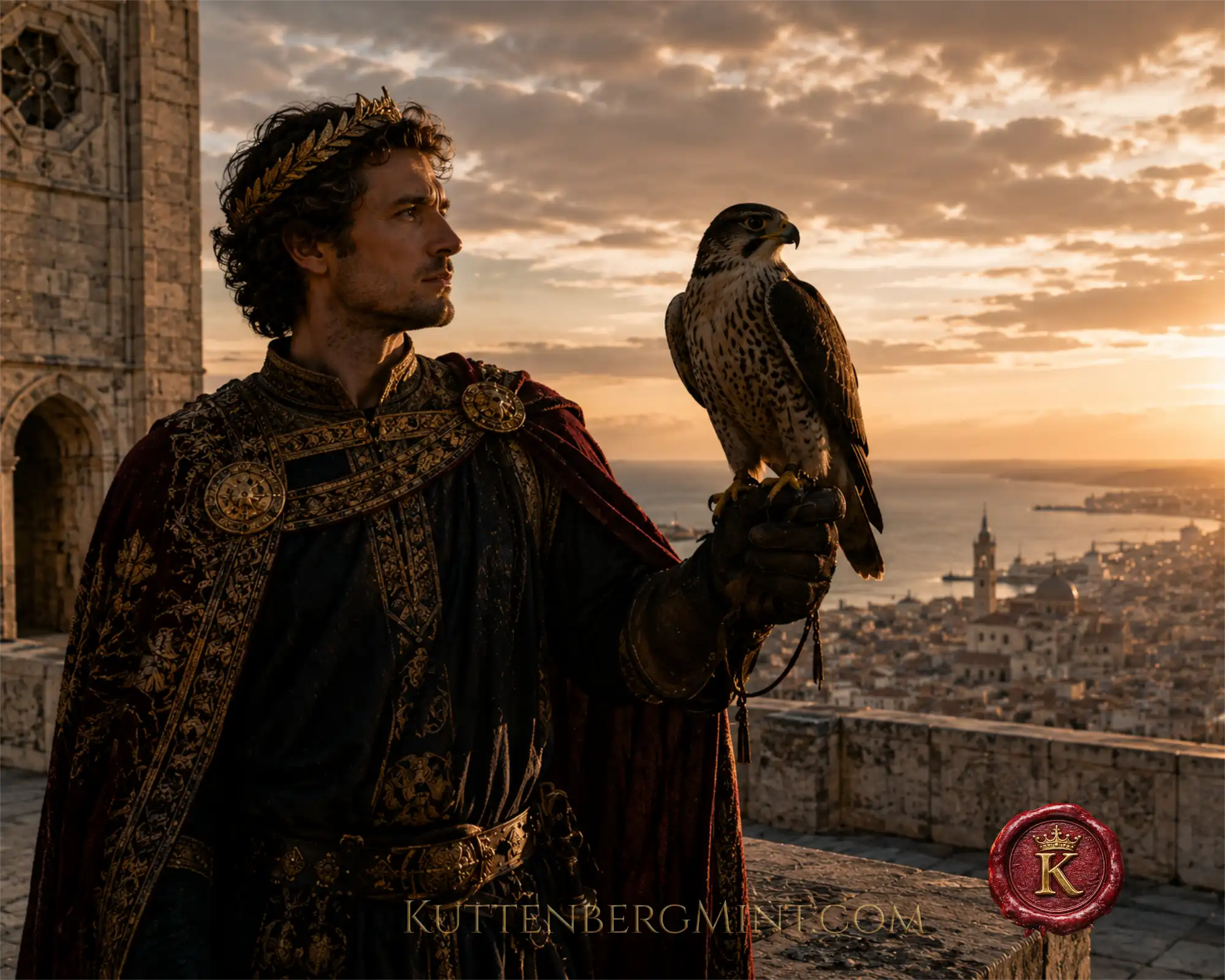
The Emperor’s Falcon
Palermo smelled of salt, spices, and smoke drifting from the harbor.
Young Luca walked through the narrow streets beside the marketplace, trying not to lose himself in the crowds of Arabs, Normans, Greeks, and mercenaries from every corner of Europe. The Kingdom of Sicily was a strange place. In a single day, a man could hear Latin, Greek, Arabic, and languages he could not even name.
And above them all ruled one man.
Frederick.
An emperor some called a new Augustus, and others the Antichrist.
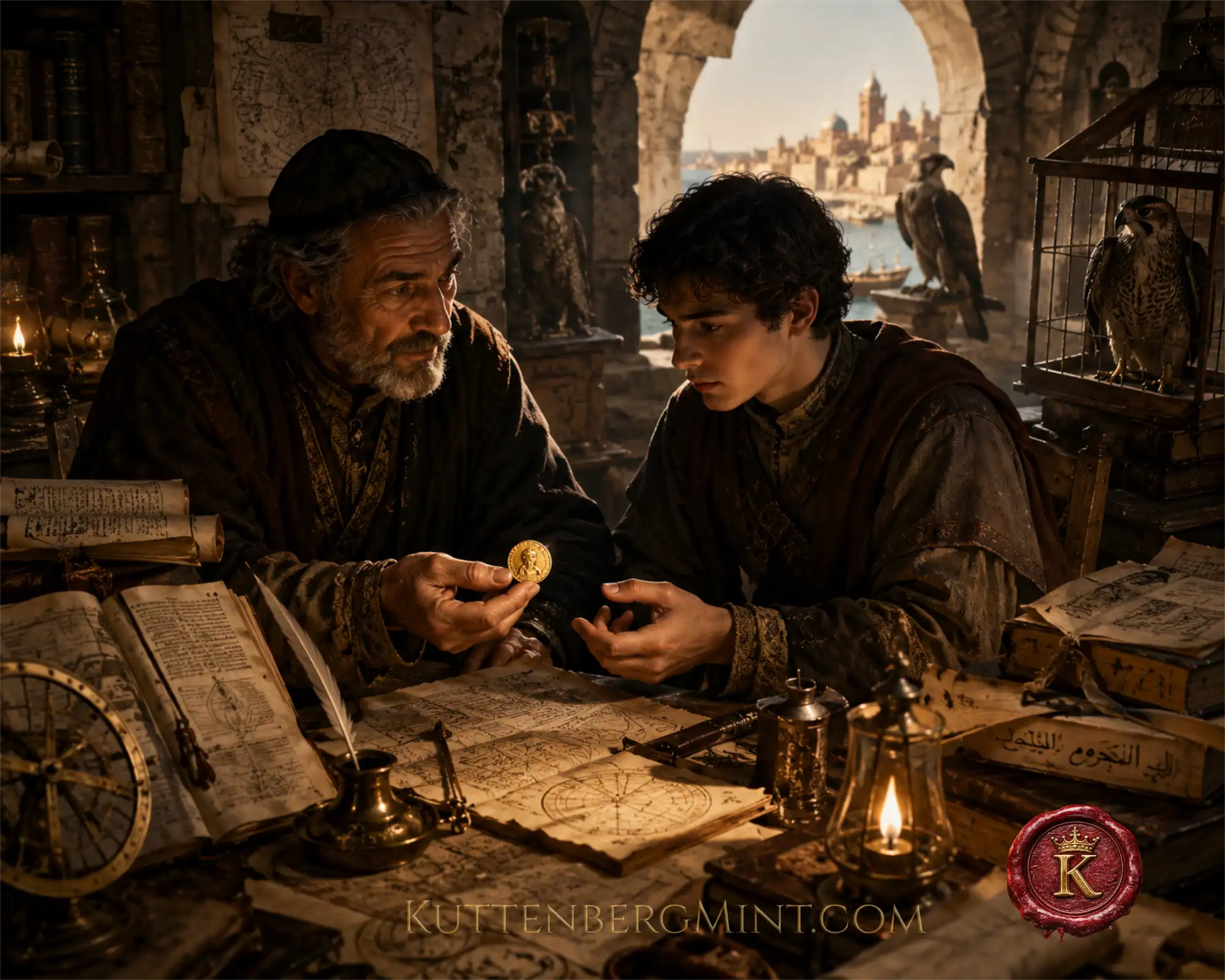
Luca entered the scriptorium hidden behind an arched courtyard. Old Matteo was already there, surrounded by parchment scrolls and cages of hunting falcons.
“You are late.”
“The market is full of soldiers.”
“That happens whenever the Pope decides to save the world from our emperor once again,” Matteo muttered.
Luca smiled faintly and laid the scroll on the table.
Only then did he notice the coin.
It lay beside the inkwell, glowing warmly in the afternoon light. On its face was the portrait of a man crowned with laurel. Not the stiff stylized face of medieval kings, but a true emperor. Sharp nose. Stern eyes. Almost Roman.
“An Augustalis,” Luca whispered.
Matteo nodded.
“The first time I saw one was twenty years ago. People could hardly believe such a coin existed.”
He lifted it carefully.
“Do you see that portrait? Frederick does not wish to be merely a king. He wants the world to remember Rome.”
Outside, gulls cried above the harbor.
One of the falcons spread its wings nervously.
“My father received one of these after the siege of Cremona,” Matteo continued quietly. “He said that when he held it in his hand, it felt as though he no longer served a man… but history itself.”
Luca touched the coin carefully.
It was heavier than he expected.
And strangely cold.
“Master… do you truly believe the emperor loves knowledge as much as people say?”
Matteo laughed softly.
“Boy. At this court, Arabic books about the stars are translated while the Pope would gladly burn them. Frederick speaks with Muslims, hunts with falcons, and argues with theologians.”
Then he leaned closer.
“And that is precisely why they want to destroy him.”
Suddenly the doors of the scriptorium burst open.
A soldier in a rain-soaked cloak stepped inside.
“Matteo! The emperor is leaving before sunset. Immediately.”
The old man paled.
“So soon?”
The soldier nodded.
“Rome threatens excommunication again.”
For a moment, silence filled the room.
Then Matteo slowly placed the Augustalis before Luca.
“Take it.”
“Master, I can’t—”
“You can. And listen carefully.”
Outside, the sea wind was rising.
“One day people may forget what Frederick truly was. They will call him a tyrant, a heretic, or a legend.”
Matteo’s tired eyes rested upon the golden coin.
“But as long as even one Augustalis survives… someone will remember that there once lived an emperor who tried to restore greatness to the world.”
And in that moment, Luca understood for the first time that coins were not merely money.
They were messages sent into the future.
FAQ
Is the Augustalis coin double-sided?
Yes, all our coins are double-sided.
Is it an exact replica of the original?
Yes, it is based on the real form, the design was created by scanning a preserved historical coin. The weight is slightly lower due to the different material – the replica weighs less than 4 grams, the original over 5.
Was Frederick II a real historical ruler?
Yes. Frederick II (1194–1250) was Holy Roman Emperor, King of Sicily, and one of the most fascinating rulers of the Middle Ages. His contemporaries called him Stupor Mundi — the Wonder of the World.
What do the inscriptions on the coin mean?
The inscriptions are based on the historical Augustalis minted by Emperor Frederick II. They reference his imperial title and deliberately evoke the legacy of ancient Rome.
On the obverse.
How much does one coin weigh?
Approximately 4 grams.
What is the coin like to the touch?
Authentic, it is a metal coin.
Is the coin suitable for LARP?
Yes, it is made of a durable alloy and has safe rounded edges.
Is it a replica or fiction?
It is a fairly faithful historical replica created in real size according to a real coin from Frederick II.
Can the coin also be used as a gift?
Yes, it is often used as a thematic trifle or collector’s item.
Is the coin magnetic?
No
What is the lifespan of the surface treatment?
It depends on the way it is used, in general – the lifespan is long.
Can the coin be used as real currency or an investment?
You can certainly try, but we suspect the cashier may have some questions. 🙂
The Augustalis has been out of circulation for nearly eight centuries.
This is a replica intended for collecting, gaming, reenactment, and display.
This is a replica for games, collecting or as a prop (it is not minted from silver and has no real value as currency).
Design
Specifications
Usage
Related products
-
Dwarven coin for rpg, larp and other games
20,00KčSelect options This product has multiple variants. The options may be chosen on the product pagePricing and sales
Quantity Discount (%) Price 1 - 9 — 20,00Kč 10 - 99 25% 15,00Kč 100 - 499 40% 12,00Kč 500 - 999 50% 10,00Kč 1,000+ 53.75% 9,25Kč -
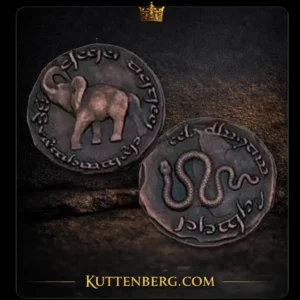
Olifant – Coins of the Barbarians of the Southern Desert Empire
20,00KčAdd to basketPricing and sales
Quantity Discount (%) Price 1 - 9 — 20,00Kč 10 - 99 25% 15,00Kč 100 - 499 40% 12,00Kč 500 - 999 50% 10,00Kč 1,000+ 53.75% 9,25Kč -
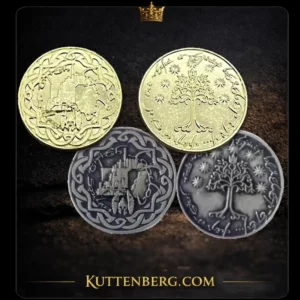
Celestar – Coin of the White City
20,00KčSelect options This product has multiple variants. The options may be chosen on the product pagePricing and sales
Quantity Discount (%) Price 1 - 9 — 20,00Kč 10 - 99 25% 15,00Kč 100 - 499 40% 12,00Kč 500 - 999 50% 10,00Kč 1,000+ 53.75% 9,25Kč -
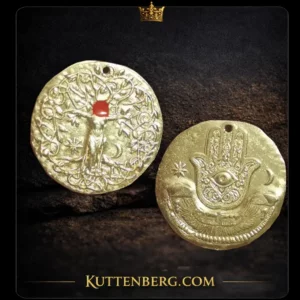
Ashera The Heavenly Mother
Price range: 20,00Kč through 200,00KčSelect options This product has multiple variants. The options may be chosen on the product page