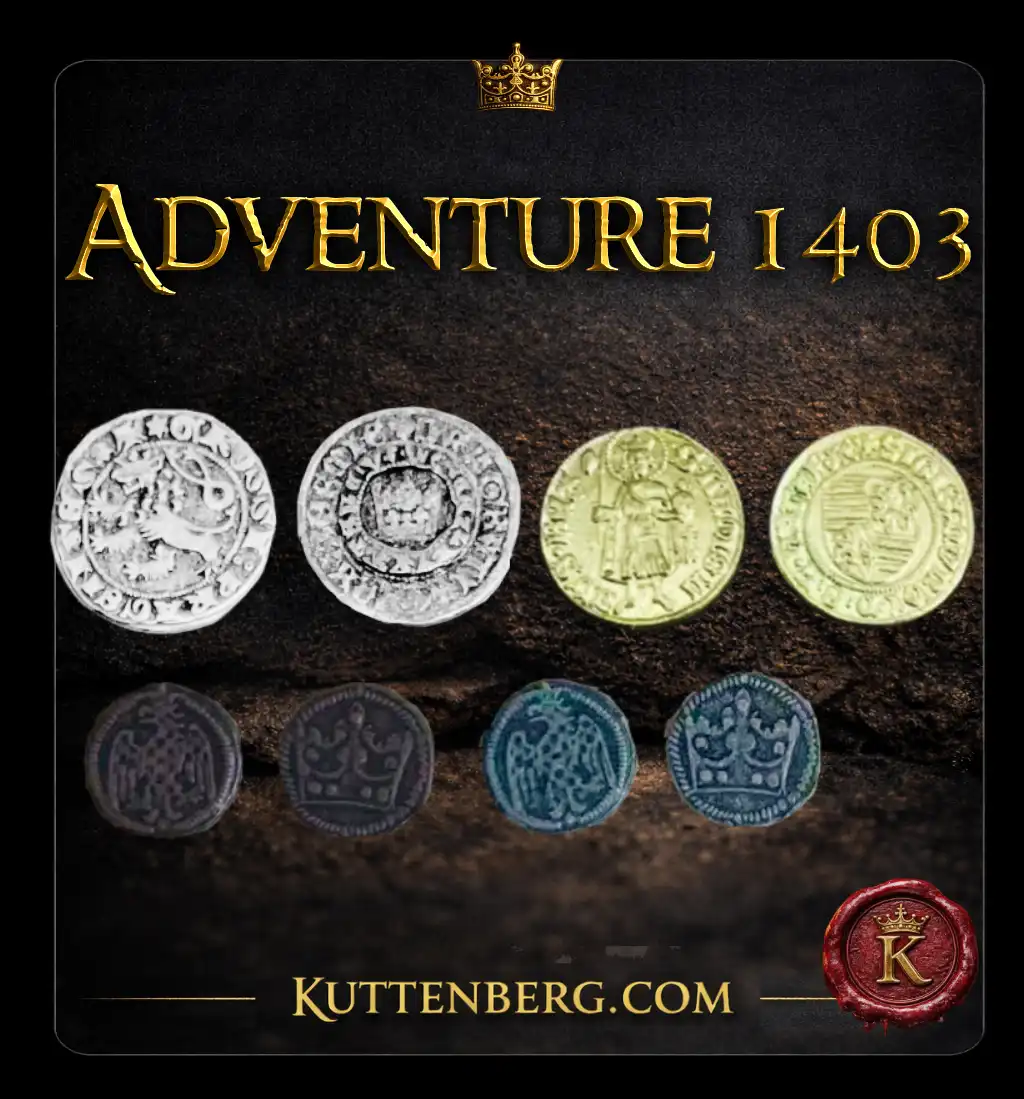
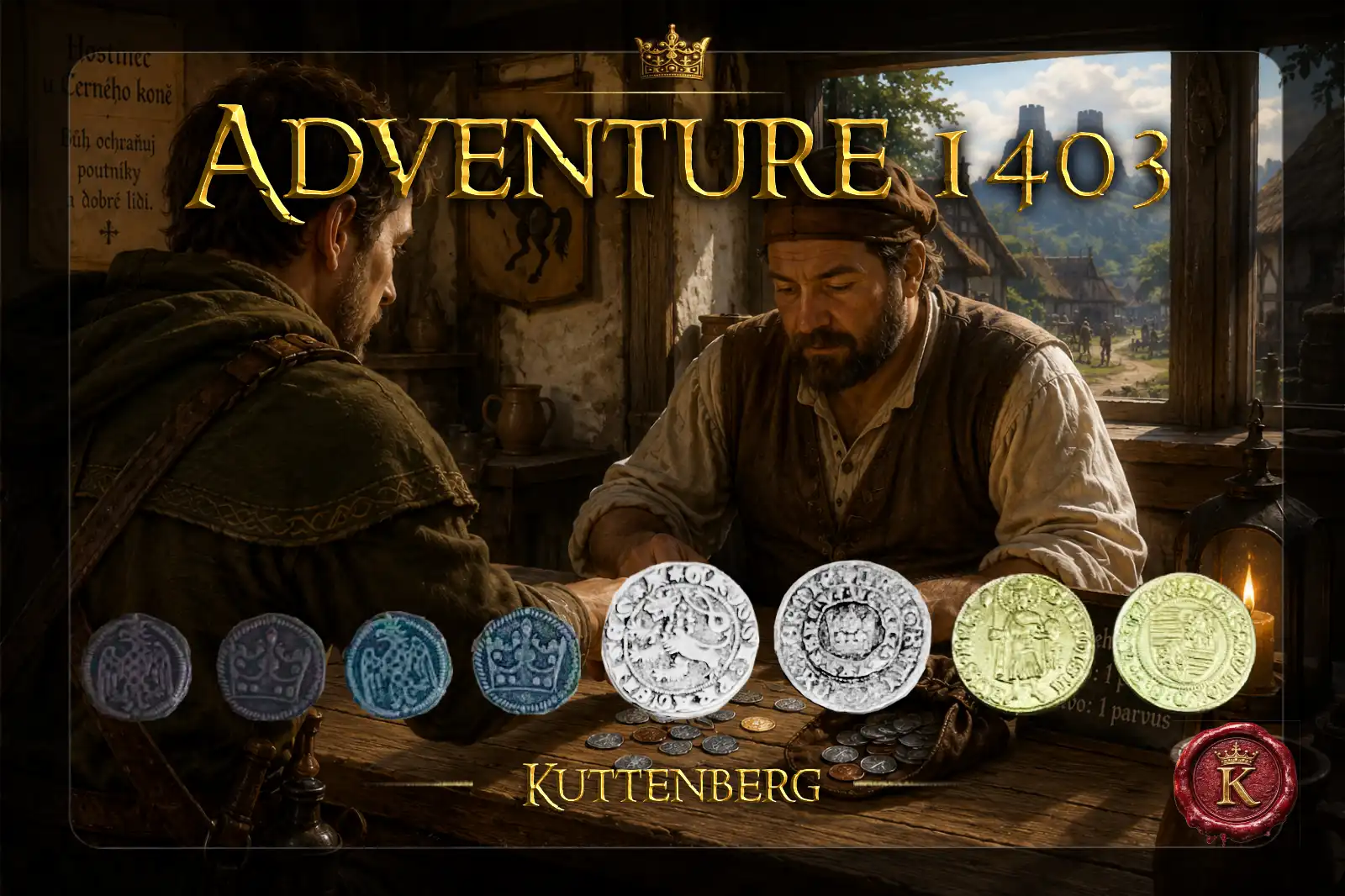
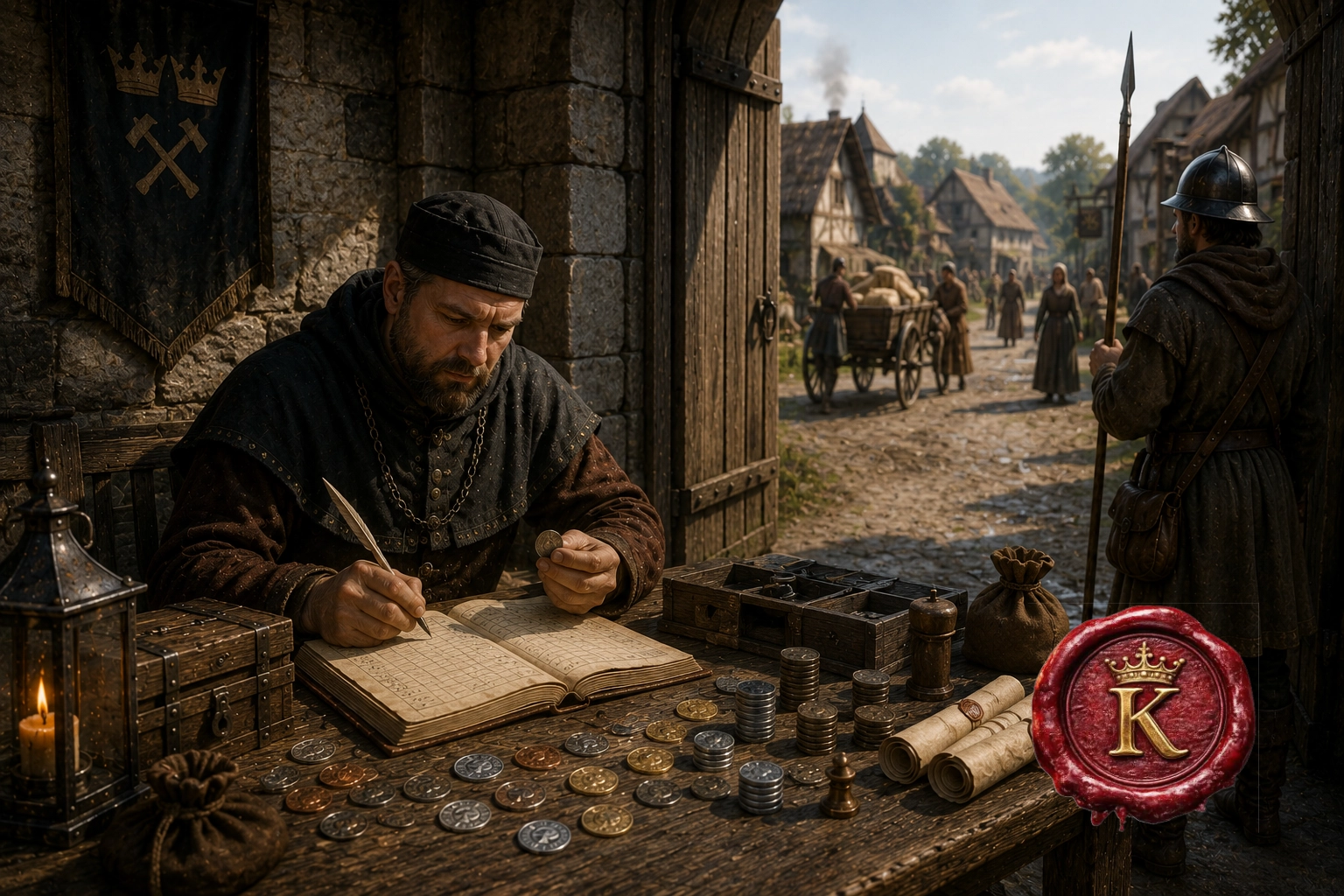
Coins of the Kingdom of Bohemia 1403
Price range: 250,00Kč through 9.750,00Kč
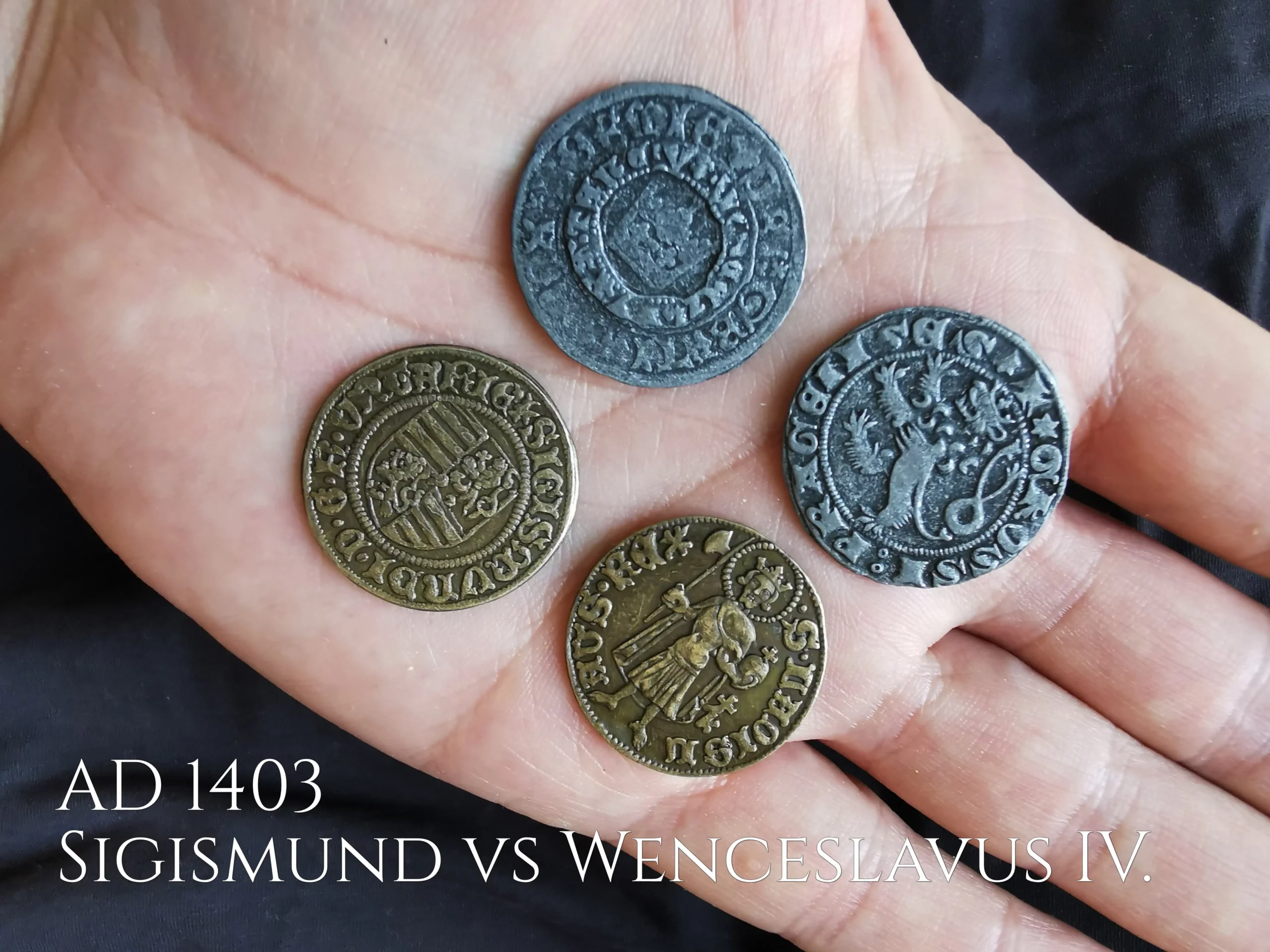
Coins of the Kingdom of Bohemia 1403 – Medieval Coin Set – the Age of Wenceslaus IV and Sigismund of Luxembourg
Are you an adventurer setting out into the Kingdom of Bohemia in the age of King Wenceslaus IV, on the eve of the Hussite Wars? Then this is the set for you.
What did money actually look like in medieval Bohemia and Moravia?
This set brings together several typical denominations that a merchant, soldier, pilgrim or craftsman might have encountered around the turn of the 14th and 15th centuries.
You will find small coins used for everyday purchases as well as gold coins representing real wealth.
The set is suitable for:
- history enthusiasts,
- LARP,
- RPGs,
- reenactment,
- board games,
- collectors of medieval coins.
Coins of the Kingdom of Bohemia 1403 – Medieval Coin Set – the Age of Wenceslaus IV and Sigismund of Luxembourg
Are you an adventurer setting out into the Kingdom of Bohemia in the age of King Wenceslaus IV, on the eve of the Hussite Wars? Then this is the set for you.
What did money actually look like in medieval Bohemia and Moravia?
This set brings together several typical denominations that a merchant, soldier, pilgrim or craftsman might have encountered around the turn of the 14th and 15th centuries.
You will find small coins used for everyday purchases as well as gold coins representing real wealth.
The set is suitable for:
- history enthusiasts,
- LARP,
- RPGs,
- reenactment,
- board games,
- collectors of medieval coins.
How did we put the sets together?
Imagine it is the spring of 1403.
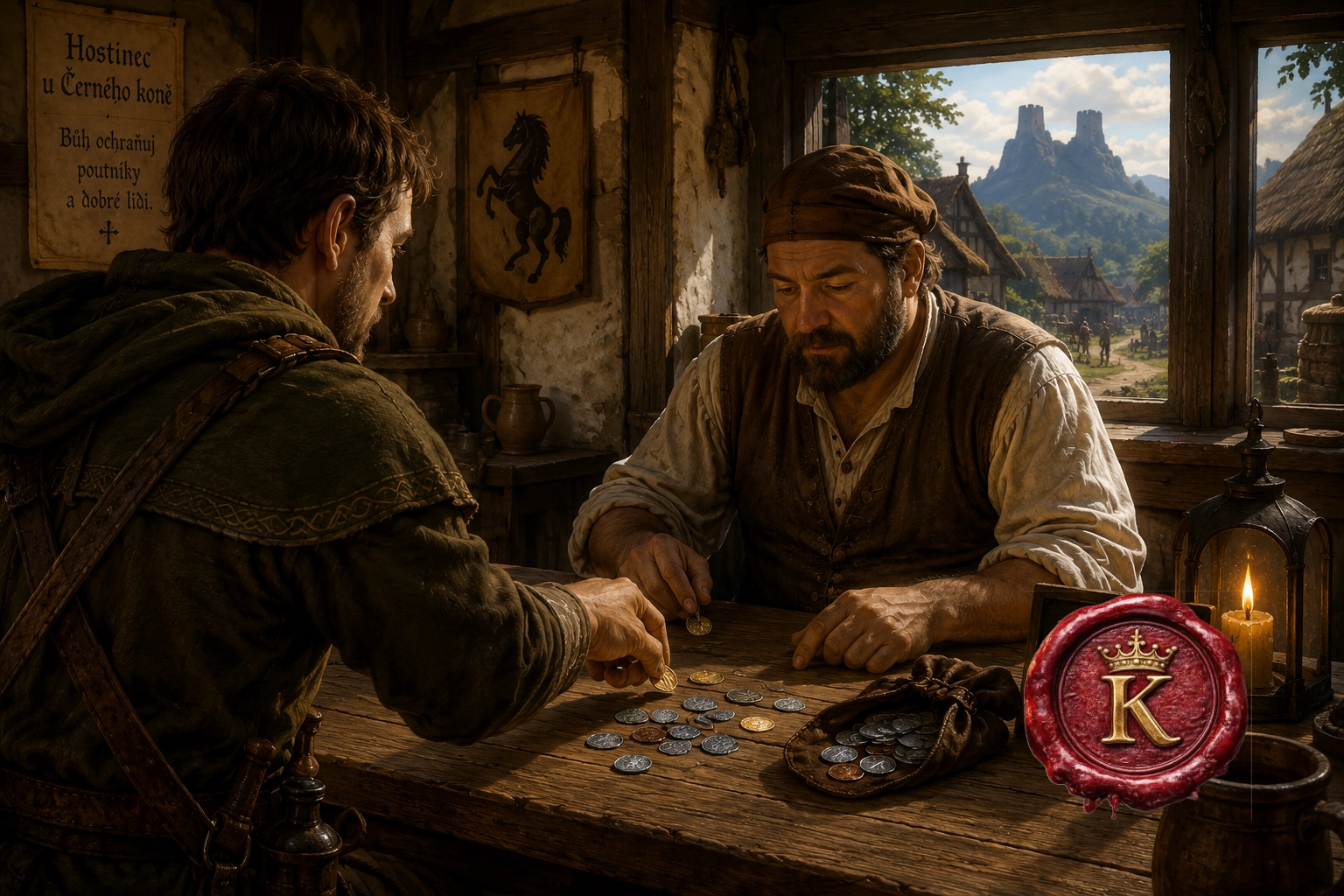
In your purse you have a few parvi for food and lodging, several Prague groschen that can already buy something substantial, and a single Hungarian ducat that you would rather not show to anyone.
In the morning, you heard that villages were burning somewhere to the east. At the tavern, someone swore that Sigismund’s soldiers were moving along the roads.
You do not know how much of it is true.
You simply need to cross the Sázava River, sell your goods and, if possible, wake up in the evening with the same purse you had when you set out that morning.
A small coin buys you bread.
The ferryman wants more.
For a groschen, the blacksmith repairs a buckle on your saddle.
And the ducat?
You keep that for the moment when a good word, a fast horse and a sharp sword are no longer enough.
That might have been a perfectly ordinary day in the Kingdom of Bohemia in 1403.
And that is the kind of purse we tried to recreate.
The first three versions are intended primarily for individual players, collectors, reenactors and history enthusiasts. They therefore contain a varied selection of coins representing a cross-section of the currency used in the medieval Czech lands.
The first three versions of the set include a leather coin pouch.
The Tax Collector set is also intended for organisers of smaller RPGs, board games, chamber LARPs and historical programmes. It contains enough coins to create a simple working in-game economy while still maintaining a varied range of denominations.
The Town Treasury and Royal Treasury, on the other hand, were designed as functional economic systems for larger games and events. Most of their contents consist of small coins used in everyday trade – parvi and groschen. Expensive gold coins appear only in small numbers, much as they would have in real medieval treasuries.
These three larger versions come with a wooden chest.
- Town Treasury – an economy for a town, guild or small estate.
- Royal Treasury – an economy for a large LARP, castle event, festival or long-running campaign.
This gives organisers enough physical currency to create rewards, trade, taxes and an actual treasury players can see and handle.
Coins of the Kingdom of Bohemia 1403
| Coin | Finish / Size | Mercenary 15 coins | Merchant 30 coins | Noble Lord / Noble Lady 50 coins | Tax Collector 100 coins | Town Treasury 300 coins | Royal Treasury 1000 coins |
|---|---|---|---|---|---|---|---|
| Sigismund – Hungarian Ducat | Gold finish, 26 mm | 0 | 3 | 5 | 10 | 30 | 100 |
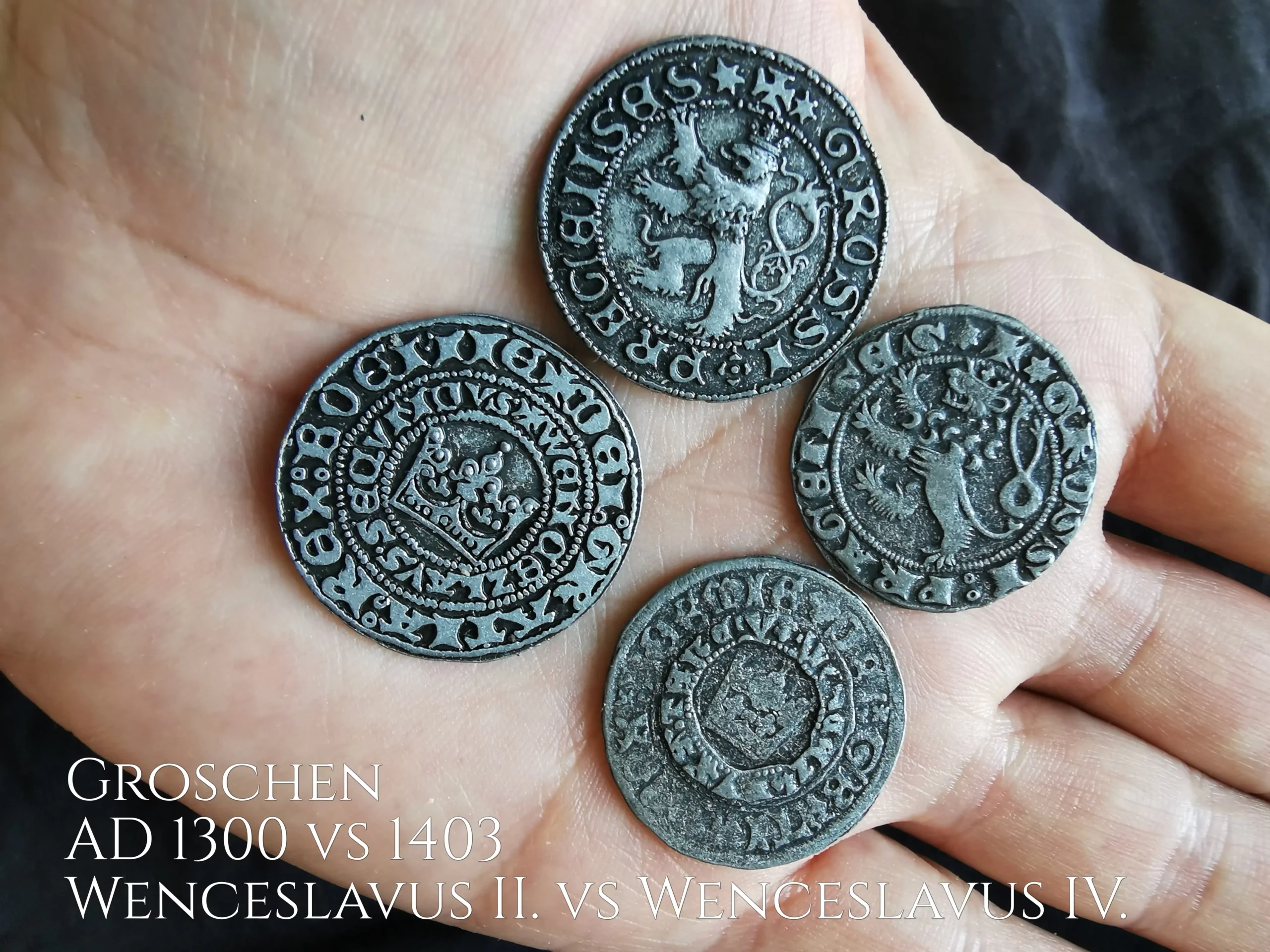
| Wenceslaus IV – Prague Groschen 1403 | Matt silver, 28 mm | 5 | 12 | 20 | 40 | 120 | 400 |
| Jobst of Luxembourg – Moravian Groschen | Matt silver, 26 mm | 3 | 5 | 10 | 20 | 60 | 200 |
| Parvus | Matt silver, 20 mm | 4 | 5 | 10 | 20 | 60 | 200 |
| Parvus | Copper patina, 20 mm | 3 | 5 | 5 | 10 | 30 | 100 |
Ducat of Sigismund of Luxembourg
A gold coin from the late Luxembourg period.
Sigismund based its appearance more closely on the florin of his grandfather, John of Bohemia, than on the large ducat of Charles IV, although the name ducat eventually became commonly used for this coin as well.
It was struck from gold mined around Kremnica.
Just as the Prague groschen represented the authority of the King of Bohemia, the ducat represented the authority and power of the King of Hungary.
Prague Groschen of Wenceslaus IV
The Prague groschen is the best-known silver coin of late medieval Bohemia and one of the great symbols of the economic power of the medieval Kingdom of Bohemia.
We made our Wenceslaus IV groschen as close as possible to the appearance of a real circulated coin, including an imperfect strike and visible wear.
If you compare it with a groschen of Wenceslaus II from roughly a century earlier, you will also notice that the later coin is somewhat smaller.
Groschen of Jobst of Luxembourg
Jobst of Luxembourg – also known as Jobst of Moravia – belonged to the Luxembourg imperial dynasty and was later even elected King of the Romans.
He had his own Moravian version of the groschen struck in Brno, despite the fact that the groschen was otherwise closely associated with royal coinage.
Parvus
The parvus was a small denomination used for everyday payments. The version represented in our set is based on a Moravian coin struck in Olomouc.
Historically, the parvus was a silver coin. The parvus was a small silver coin used for everyday payments – broadly comparable in function to the German pfennig, French denier or English penny.
Our copper-patina version is included to make it easier for players and organisers to build an intuitive game economy in which a visibly copper-coloured coin represents the smallest value.
How did the medieval economy work?
Six Groschen
He was supposed to receive six groschen.
Two for the message.
Two for the journey.
And two because the road passed through a district where people had lately begun to disappear.
When he reached the ford, the ferryman demanded an extra parvus.
“Because of the war.”
In the next village, they wanted twice as much for oats as they had a month earlier.
“Because of the war.”
That evening he found a dead horse beside the road and, a little farther on, an abandoned wagon.
After that, he stopped asking why the payment was six groschen.
He reached the town at dawn.
He delivered the message, received his payment and weighed the coins in his palm several times.
Six Prague groschen.
In normal times, good money.
But in the Kingdom of Bohemia in 1403, it was becoming increasingly difficult to remember what normal times looked like.
How were the coins used?
Most people would never have held a gold ducat in their hands.
Everyday purchases were made with small coins, while groschen were used for more substantial transactions. Gold coins represented considerable wealth and were generally reserved for important payments.
That is why the set contains several denominations in proportions that make it possible to create a believable in-game economy.
The following table should not be taken as an exact economic reconstruction. Think of it as a storytelling and game-design aid.
Between roughly 1350 and 1450, prices could vary dramatically depending on war, region, shortages and the particular period.
| Coin | What it might buy | Suggested use in a game economy | Approximate modern equivalent |
|---|---|---|---|
| Parvus – copper colour | A loaf of bread, mug of ale, candle | Ale at an inn, soup, a night in a stable | €1–2 |
| Parvus – silver colour | Several loaves, simple meal | Cheap equipment, torches, food for a day | €3–5 |
| Groschen | Several days of basic living costs | Knife, shoes, simple clothing | €15–25 |
| Sigismund Ducat | Roughly a month’s income for an ordinary person | High-quality equipment, part of the price of a riding horse | €150–250 |
How to use the coins in a LARP
Small everyday payments
- Parvus
Ordinary trade
- Groschen
Wealthy townspeople, merchants and nobility
- Ducat
For Game Organisers
For a simple game economy, you can use the following rule:
1 groschen = approximately €20 of in-game value
This gives you an easy system:
| Coin | Value in groschen |
|---|---|
| Copper-coloured Parvus | 0.1 |
| Silver-coloured Parvus | 0.25 |
| Moravian Groschen | 1 |
| Prague Groschen | 1 |
| Sigismund Ducat | 10 |
This is deliberately simplified rather than historically exact, but it works well in play.
You can then set prices such as:
- ale = 1 parvus
- bread = 1 parvus
- soup = 2 parvi
- dagger = 1 groschen
- sword = 5 groschen
- horse = 2 ducats
Once players begin physically exchanging coins, the economy quickly becomes intuitive.
Coins of the Kingdom of Bohemia 1403 – Tax Collector Set
Shipping and Delivery
We ship worldwide from Prague, Czech Republic.
Shipping cost
Shipping is charged at a fixed rate.
Because the shipping price does not increase significantly with the number of coins ordered, larger orders offer a much better shipping cost per coin.
Depending on the destination, you can choose courier delivery to your address or delivery to a pickup point or parcel locker.
Cash on delivery is available in the Czech Republic and Slovakia.
Orders can also be collected directly from our warehouse in Prague 6 – Dejvice and paid for on site.
Dispatch time
We usually dispatch orders within 1–2 business days.
Delivery within the Czech Republic normally takes approximately two additional days.
Shipping methods
Within the Czech Republic and Slovakia, we usually use Packeta or PPL.
International orders are shipped using suitable tracked carriers according to destination.
Tracking is provided for all orders.
The King’s Pay
Matthias Héderváry received his pay in Kolín.
It was a cold morning, and the mud in the marketplace had frozen overnight so hard that it cracked beneath his boots like thin ice.
Nearly a hundred men waited outside the house where Sigismund’s scribes had established their office.
Hungarians, Germans, Bohemians, several bearded Cumans wrapped in furs, and God knew who else.
Every one of them was waiting for money.
“Name.”
“Matthias Héderváry.”
The scribe did not even look up.
“Four horses?”
“Three.”
Now he looked up.
“The list says four.”
“The fourth was killed near Kutná Hora.”
“Then someone should have killed it tomorrow.”
The man sitting beside the scribe laughed.
Matthias did not.
Two weeks earlier, the horse had been called Csillag, and Matthias had ridden it all the way from Hungary.
Now it lay somewhere in a ditch with an arrow through its throat.
The scribe counted for a while and then scattered several coins across the table.
Prague groschen.
Matthias picked one up.
“This is the King of Bohemia.”
“Wenceslaus.”
“I know who it is.”
“Then why are you asking?”
Matthias turned the groschen between his fingers. The crown was battered and parts of the lettering had almost disappeared.
“Because we came here to fight against him.”
The scribe shrugged.
“And?”
“Nothing.”
On the table lay coins issued in the name of a king who was sitting in captivity, being handed out to soldiers serving his brother, who claimed that he had come to save that king’s kingdom.
There was something about it that Matthias liked.
Something perfectly fair.
“One more thing.”
The scribe pushed a gold coin towards him.
A Hungarian ducat.
That coin Matthias knew well.
Saint Ladislaus with his halberd. Royal money. Good gold.
You did not spend a coin like that on ale.
He slipped it into a small pouch beneath his shirt.
“What is this for?”
“The horse.”
“That isn’t enough.”
“Complain to the king.”
“Which one?”
This time nobody laughed.
They rode south that afternoon.
There were twelve of them.
Their task was to find a wagonload of oats that had failed to reach the army.
Before they left, the commander of their unit, an old Austrian named Ulrich, read them part of a royal proclamation.
Matthias understood only some of it.
Disturbances in the kingdom.
Damage caused by disobedient lords.
King Sigismund acting to preserve the land and the rights of his dearest brother Wenceslaus.
When the scribe began reading Sigismund’s titles, it almost took longer than the rest of the proclamation.
“By the Grace of God, King of Hungary…”
Someone behind Matthias muttered:
“May the Grace of God also persuade him to pay on time.”
Ulrich turned around.
“Who said that?”
Nobody answered.
“Good. Then let us go and save Bohemia.”
They found the wagon shortly before dusk.
It stood sideways across the road between two stretches of forest.
One horse was gone.
The other lay dead in its harness.
The driver sat propped against a wheel with a piece of cloth pressed against his side.
He was still alive.
“Who attacked you?” Ulrich asked.
The driver looked at him.
“Soldiers.”
“Whose?”
The man laughed bitterly.
“Should I ask them next time?”
Half the sacks were missing from the wagon.
Matthias dismounted and looked around.
Tracks of several horses remained in the frozen mud.
“They went west.”
“How many?”
“Six. Maybe seven.”
Ulrich looked at the sky.
“Leave them.”
“And the oats?”
“We still have half a wagon.”
The driver moved.
“That isn’t enough.”
“It is for us.”
Matthias looked at him.
The man spoke with a Bohemian accent Matthias could not always understand. He was probably around the same age as Matthias, perhaps thirty or a little older.
“Where were you taking it?”
“To you.”
“Then half is enough.”
“Not for you.”
The driver shook his head.
“All of it. I have to deliver all of it. Otherwise I pay for what’s missing.”
Ulrich was no longer listening.
“We take the wagon.”
“And him?”
“What about him?”
Matthias looked at the blood soaking through the cloth.
“He’ll die.”
“Perhaps.”
Ulrich mounted his horse.
“His king will take care of him.”
Matthias remained where he was.
Then he reached into his purse.
He took out one of the Prague groschen he had been paid that morning.
“Is there a village nearby?”
The driver pointed towards the forest.
“Two miles.”
Matthias handed the groschen to one of the younger riders.
“Petr. Take him there.”
“Why me?”
“Because you speak Czech.”
“And you?”
“I have a groschen.”
Petr looked at the coin.
“That’s my pay.”
“Now it’s your reward.”
The young man sighed, but dismounted.
The driver stared at Matthias for a moment.
“Are you Sigismund’s man?”
Matthias laughed.
“No.”
“Then whose?”
Matthias thought about it.
Then he pointed at the purse hanging from his belt.
“Whoever pays.”
They reached the inn that evening.
Ale cost two parvi.
A bowl of hot porridge cost three.
Matthias paid.
At the next table, two Bohemians were arguing about the king.
One said that Wenceslaus was the rightful ruler of Bohemia and Sigismund was a traitor.
The other insisted that Wenceslaus had proved incapable of ruling and someone finally had to restore order.
Matthias did not understand every word.
He understood enough.
“And you?” one of them finally asked him. “Who do you believe? Wenceslaus or Sigismund?”
Matthias placed a coin on the table.
A Prague groschen.
“This one.”
The Bohemians looked at the coin.
“That’s Wenceslaus.”
“Yes.”
Then Matthias took the gold ducat from beneath his shirt and placed it beside the groschen.
“And this is Sigismund.”
Both men fell silent.
Matthias looked at the two coins.
Two kings.
Two brothers.
One kingdom.
Then he put the gold ducat away again.
“Wenceslaus’s groschen bought my ale today,” he said. “Sigismund’s ducat hasn’t bought anything yet.”
He raised his mug.
“So tonight, Wenceslaus is winning.”
The innkeeper was the first to laugh.
Soon the whole tavern joined him.
Outside the windows, another column of soldiers was passing along the road.
And somewhere far to the south, something was burning.
From the tavern it looked like nothing more than a red glow against the night sky.
Three Groschen for a Dead Man
Jan Vrána found the dead mercenary half a mile from the village.
He was lying on his back beneath a hazel bush with his eyes open.
Jan stopped his horse.
The first thing that occurred to him was that dead men looked surprisingly ordinary.
The second was that the man had very good boots.
He dismounted.
“Our Father, who art in heaven…”
He stopped after the first few words.
“You don’t understand me anyway, do you?”
Judging by his clothes, the man was Hungarian.
Or perhaps Cuman.
Jan was not very good at telling the difference and had no particular desire to improve.
A short bow lay nearby.
The quiver was empty.
Jan looked around.
The forest was silent.
He pulled off one of the dead man’s boots.
Too small.
“Pity.”
He put it back.
Then he found the purse.
Inside were three Prague groschen, several small coins and a piece of silver chain.
Jan poured the coins into his palm.
“Well,” he told the dead man, “you turned out to be useful after all.”
“I wouldn’t do that.”
Jan froze.
The voice came from the forest.
He slowly put the coins back.
A man stepped out from behind a tree carrying a crossbow.
He was short, thin and wore a cap much too large for him.
“That’s my dead man,” he said.
“Yours?”
“I shot him.”
“Then you can keep him.”
“The purse too.”
Jan looked at the crossbow.
“Of course.”
The man stepped closer.
Jan handed him the purse.
“Everything?”
“Everything.”
The man took it and looked inside.
That was when Jan struck him.
It was not a knightly duel.
No circling. No clever feints.
Jan simply smashed his forehead into the man’s nose.
The crossbow fell into the grass.
The man cursed.
Jan kicked him in the knee, grabbed the weapon and aimed it at him.
Only then did he realise that it was not cocked.
The other man noticed too.
For a moment they stared at one another.
“Well,” Jan said. “That’s inconvenient.”
The man threw himself at him.
A few minutes later, both of them were sitting on the ground.
Jan’s lip was bleeding.
The man with the oversized cap had a broken nose.
The purse lay between them.
“Half each?” Jan suggested.
The man wiped away the blood.
“There are three groschen.”
“One and a half each, then.”
“How do you split a groschen?”
“You started it.”
“You were robbing a dead man.”
“You killed him.”
The man thought about this.
“That’s true.”
Jan made himself more comfortable.
“Why?”
“He took my pig.”
“You shot a man because of a pig?”
“It was a good pig.”
“Ah.”
That made considerably more sense.
“My name is Mikuláš.”
“Jan.”
Mikuláš pointed towards the dead man.
“They came yesterday. Ten or twelve of them. Took chickens, grain and the pig.”
“Sigismund’s men?”
“That’s what they said.”
“Anyone can say that.”
“They had his banner.”
Jan shrugged.
“Anyone can have that too.”
Mikuláš looked at him.
“Whose side are you on?”
“Nobody’s.”
“You can’t do that nowadays.”
“So far I can.”
They divided the money.
Mikuláš took one groschen and all the small coins.
Jan took two groschen.
They left the piece of silver chain with the dead man.
“Why?”
“So he’ll have something to show Saint Peter.”
“A Hungarian?”
“I don’t know.”
Mikuláš looked at the body for a moment.
“Maybe he had children.”
“Maybe.”
“We should bury him.”
Jan looked at the sky.
“It’ll be dark soon.”
“Then quickly.”
They dug with a knife, their hands and a broken branch.
The grave was not deep.
When they were finished, Mikuláš made the sign of the cross over the earth.
“Now the tavern,” Jan said.
“You have money.”
“So do you.”
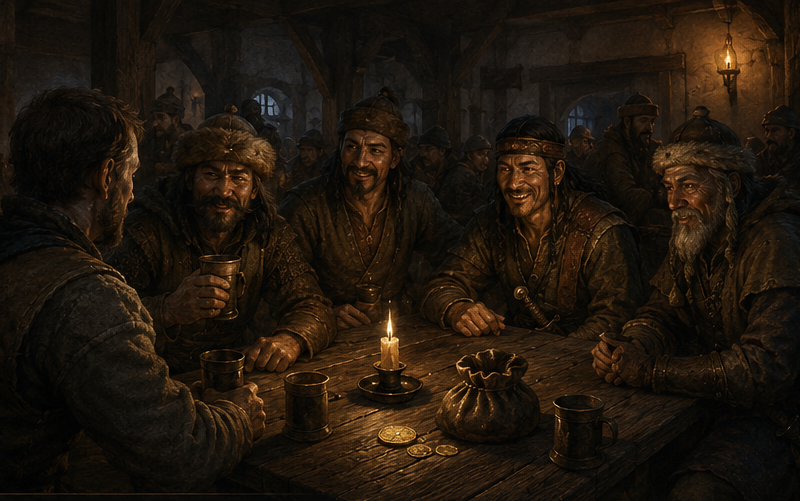
The tavern was full.
Peasants sat on the benches, alongside two armed retainers and a thin monk asleep with his head on the table.
Someone near the fire was loudly reporting the latest news.
King Wenceslaus was in Vienna.
Sigismund would soon control all of Bohemia.
No, Wenceslaus would escape.
No, Wenceslaus was a drunkard.
No, Sigismund was a murderer and a traitor.
No, Sigismund was saving the kingdom.
“He says so himself,” declared the man by the fire. “Apparently he came here to restore order.”
“Is it working?” someone asked.
The tavern erupted in laughter.
Jan and Mikuláš sat in a corner.
“Two ales,” Jan said.
The innkeeper brought them.
“Two parvi.”
Mikuláš placed one of the dead mercenary’s small coins on the table.
The innkeeper examined it.
“Where did you get that?”
Mikuláš took a drink.
“Royal service.”
Jan nearly choked on his ale.
The innkeeper pocketed the coin.
“Which king?”
Jan and Mikuláš looked at each other.
“We haven’t decided yet,” Jan said.
They went their separate ways the following morning.
Mikuláš returned to his village.
Jan rode south.
After several hours he reached a ford guarded by armed men.
“Toll,” one of them said.
“How much?”
“One groschen.”
“For what?”
“Royal order.”
Jan sighed.
“Which king?”
The man frowned.
“What?”
“Nothing.”
Jan took out one of the two groschen he had taken from Sigismund’s dead mercenary the previous day.
The coin bore the name of Wenceslaus IV.
He handed it to the guard.
The man bit it, nodded and pointed towards the ford.
“Go.”
Jan crossed to the other side.
Only then did it occur to him that he had just paid one of Sigismund’s men with a coin of King Wenceslaus that he had taken from a dead soldier of Sigismund after helping to bury him alongside the man who had killed him because of a stolen pig.
He looked back.
Bohemia looked exactly the same on both sides of the river.
“Royal order,” he muttered.
And continued on his way.
Design
Specifications
Usage
FAQ
Are the coins double-sided?
Yes. All of our coins are double-sided.
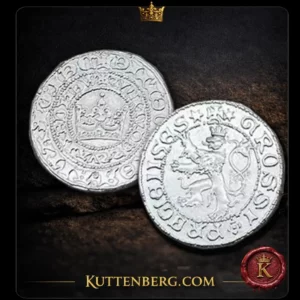
The Prague groschen has the Bohemian lion on one side and the royal crown on the other, just like the historical original.
Is this an accurate replica of the original coin?
Yes.
Our Prague groschen is based on a real coin of the reign of Wenceslaus IV, including the irregular strike and worn appearance typical of circulated medieval coins.
The design follows the historical Prague groschen, and the size and weight are close to the original.
What inscriptions appear on the Prague Groschen?
The inscription GROSSI PRAGENSES – “Prague Groschen” – appears around the coin.
The other legends include DEI GRACIA REX BOEMIE – “By the Grace of God, King of Bohemia” – and WENCEZLAVS TERTIVS.
Later Prague groschen issues naturally differed according to the ruler under whose authority they were struck.
How much does one coin weigh?
Approximately 7 grams.
What does the coin feel like?
Like a real coin.
It is made of metal, with the weight and solid feel that plastic game tokens simply cannot reproduce.
Is the coin suitable for LARP?
Yes.
The coins are made from a durable metal alloy and have rounded edges suitable for ordinary LARP, RPG and tabletop use.
Is this a historical replica or a fantasy coin?
The coins in this set are based on real historical originals and are produced approximately at their historical size.
Can the coins be given as a gift?
Yes.
They work well as small historical gifts, collectibles, game props or accessories for medieval enthusiasts.
Are the coins magnetic?
No.
How durable is the surface finish?
It depends on how the coin is used, but under normal conditions the finish is long-lasting.
Like a real circulated coin, heavy use will gradually create additional wear and character.
Can the coins be used as real currency or as an investment?
No.
You are welcome to try, but we are afraid you may have some difficulty – these coins have been out of circulation for several centuries. 🙂
They are replicas intended for games, collecting and use as props. They are not struck from precious metal and have no monetary or investment value.
Safety Information
This coin is not a toy.
Not suitable for children under 3 years of age due to the risk of swallowing small parts.
Keep out of reach of small children.
Additional safety recommendations
- The coins are made of metal and may be heavier than ordinary plastic game tokens.
- Do not use them as throwing objects or for striking.
- Do not chew or place the coins in the mouth.
- Not suitable for children under 3 years of age without adult supervision.
Care and Cleaning
Normal cleaning
- Wipe with a dry or slightly damp soft cloth.
- If necessary, use a mild soap solution, then dry the coin thoroughly.
- Do not use abrasive cleaners or metal scouring pads, as they may damage the surface finish.
What not to do
- Do not leave the coins wet for long periods.
- Do not expose them to aggressive chemicals such as cleaning sprays, acids, acetone or nail-polish remover.
- Do not put them in a dishwasher – heat and water pressure may damage the finish.
- Do not leave them in salt water or other corrosive environments.
- Do not store them loose together with keys, which can quickly scratch the surface.
Long-term storage
- Store in a dry place.
- Ideally keep the coins in a pouch, box or envelope.
We originally created our coins for our own historical games at Cesty časem, including the Prague groschen for our game Interregnum 1313 – Bloody Times.
Related products
-
Ashera The Heavenly Mother
Price range: 20,00Kč through 200,00KčSelect options This product has multiple variants. The options may be chosen on the product page -
Ducat – Golden Coin of Charles IV
20,00KčSelect options This product has multiple variants. The options may be chosen on the product pagePricing and sales
Quantity Discount (%) Price 1 - 9 — 20,00Kč 10 - 99 25% 15,00Kč 100 - 499 40% 12,00Kč 500 - 999 50% 10,00Kč 1,000+ 53.75% 9,25Kč -
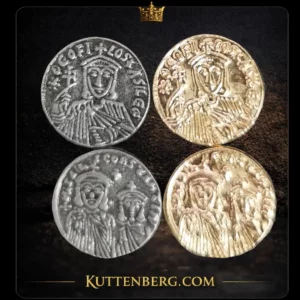
Solidus Replica Byzantine Coin
18,75KčSelect options This product has multiple variants. The options may be chosen on the product pagePricing and sales
Quantity Discount (%) Price 1 - 9 — 18,75Kč 10 - 99 26.67% 13,75Kč 100 - 499 40% 11,25Kč 500 - 999 49.33% 9,50Kč 1,000+ 53.33% 8,75Kč -
Prague Groschen – metal game replica coin
21,25KčSelect options This product has multiple variants. The options may be chosen on the product pagePricing and sales
Quantity Discount (%) Price 1 - 9 — 21,25Kč 10 - 99 23.53% 16,25Kč 100 - 499 38.82% 13,00Kč 500 - 999 50.59% 10,50Kč 1,000+ 54.12% 9,75Kč