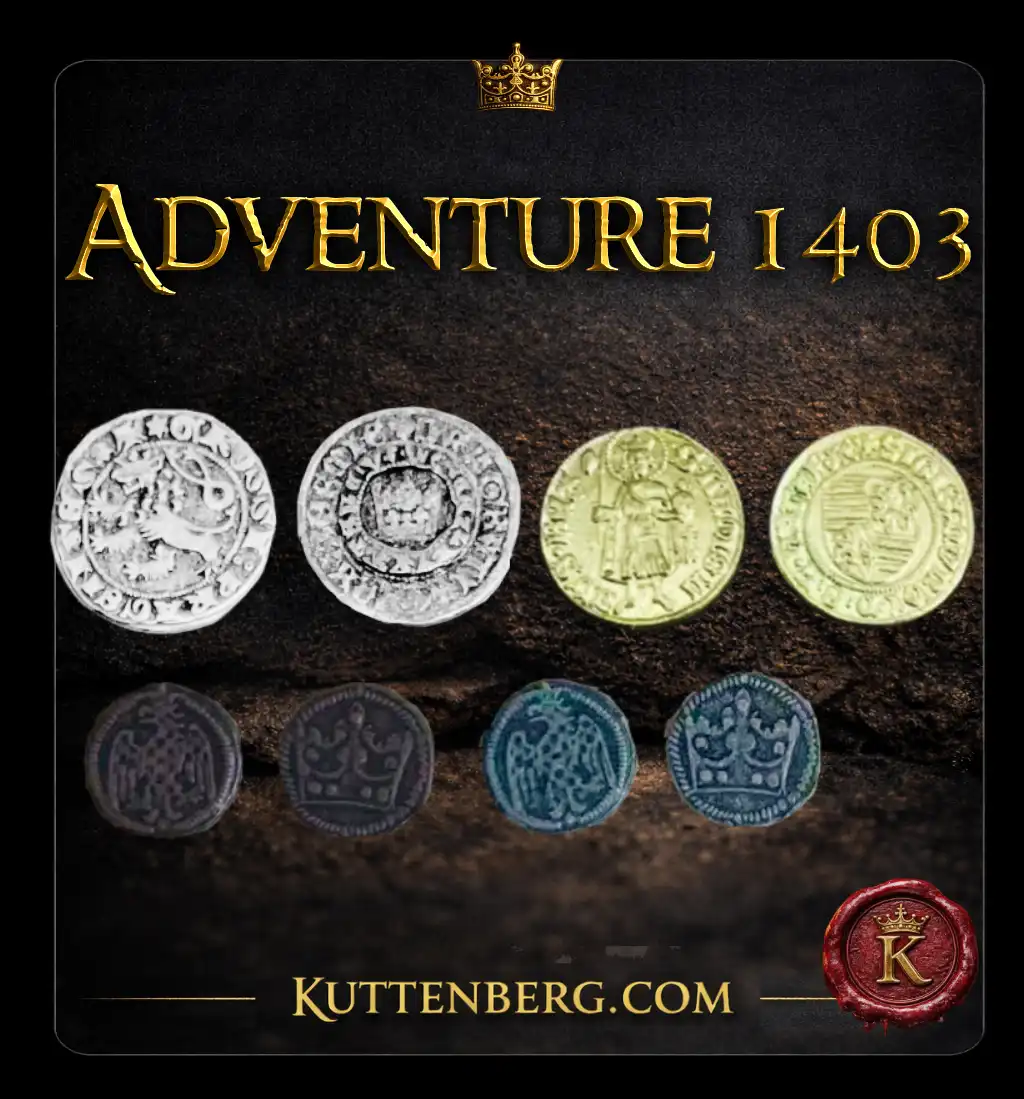
Parvus small medieval silver coin
18,75Kč
Parvus – small coin from the 15th century
Moravia, Hussite Wars period, around 1428
This coin is not a replica of a specific historical mintage. It is inspired by the turbulent period of the Hussite Wars and the personality of Jan of Sovinec, one of the most important Moravian noblemen of his time.
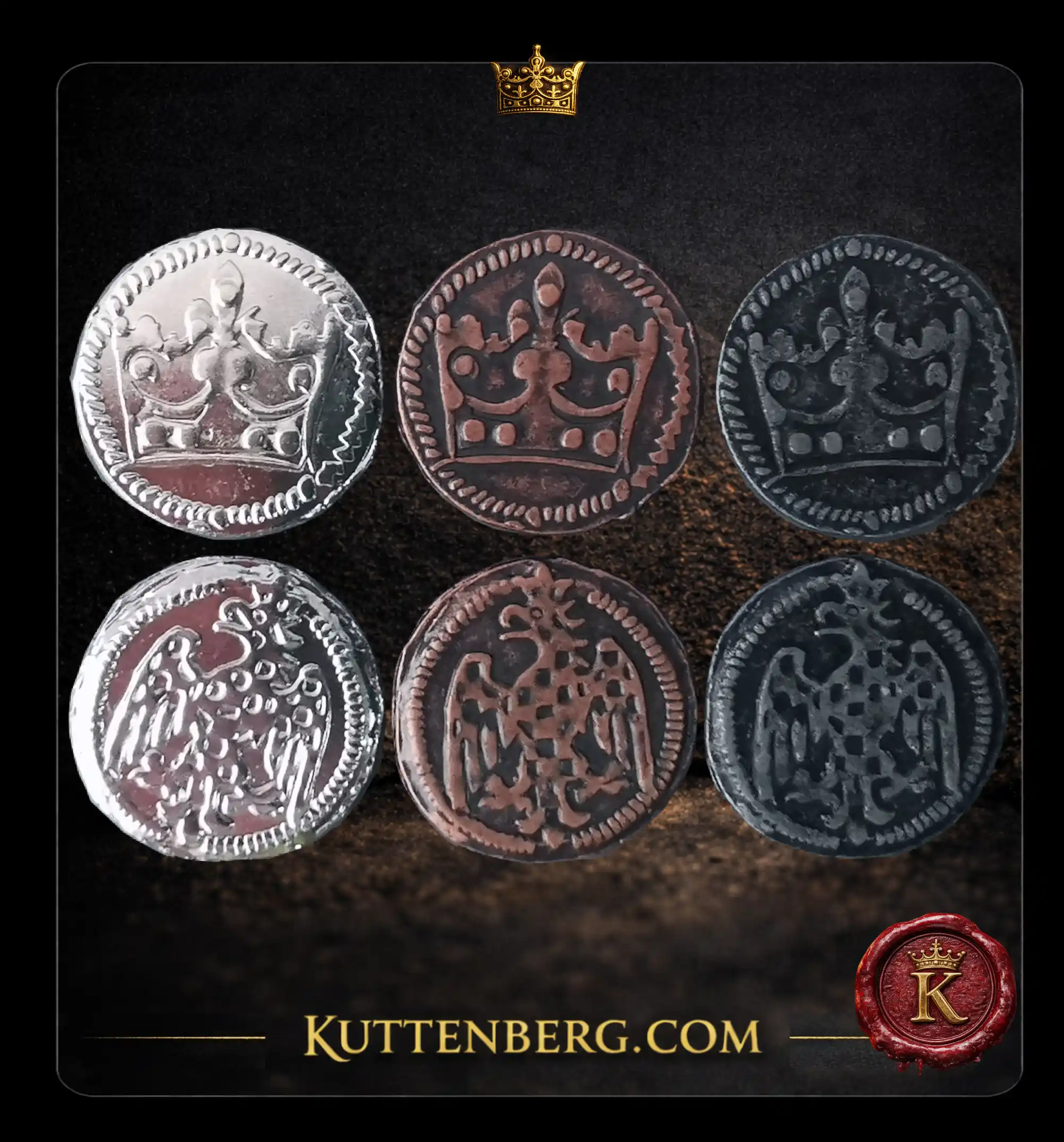
On the obverse it bears the coat of arms of the lords of Sovinece. On the reverse is a Moravian eagle inspired by medieval Moravian coins.
What was a parvus?
A parvus was a small silver coin of everyday life.
Its value was set at 12 parvus to one grosz.
While gold ducats were used for large transactions and grosz was the main currency of the kingdom, people paid with parvus for everyday purchases at the market, food, services or small crafts.
They were coins that people carried every day in burghers.
For LARP, RPG and game economies
Most historical replicas represent wealth – ducats, thalers or groschen.
However, a real medieval person, whether a craftsman, day laborer, merchant or mercenary, spent most of his time with small change.
That is why parvus is an ideal part of game economies:
- makes a difference between rich and poor characters,
- allows for small payments,
- functions as a reward for simple tasks,
- helps create a believable sense of a real market.
Parvus small medieval silver coin
Moravia, Hussite Wars period, around 1428
This coin is not a replica of a specific historical coinage. It is inspired by the turbulent period of the Hussite Wars and the personality of Jan of Sovinec (Eulenburg), one of the most important Moravian noblemen of his time.
On the obverse it bears the royal crown, as it symbolizes the royal power that Jan of Sovince represented. On the reverse there is a Moravian eagle, which represents the mintage in Olomouc from Sovinec silver. Original parvus of Wenceslas I
Coins from the time when coins were missing
The first third of the 15th century was a period of wars, uncertainty and economic upheavals for the Czech lands. However, trade had to continue. Merchants, craftsmen and soldiers needed money every day.
The Kutná Hora mint was repeatedly paralyzed during the Hussite Wars and there was a shortage of quality circulating coins. Older coins disappeared from circulation, were hidden or taken abroad.
It is easy to imagine that at such a time a powerful Moravian lord might have needed his own small coin for paying soldiers, purchasing supplies or trading in his towns and estates.
This parvus represents one of the possible forms of such a coin.
Jan (John) of Sovinec
The inspiration for this particular coin was John Pňovický of Sovinec, a Moravian nobleman, provincial official and defender of Olomouc during the Hussite Wars.
During the Hussite Wars, he was a permanent and significant supporter of Emperor Sigismund, gradually building up his own small mercenary army with which he resisted the Hussites in Moravia. And loyalty to the king also brought him benefits – his domain grew and he controlled a number of cities and territories in northern Moravia. Although he was originally a supporter of the Chalice, he remained faithful to the oath taken by the Luxembourgs. At a time when many changed sides according to the development of the war, he chose loyalty to the given word.
What was the parvus?
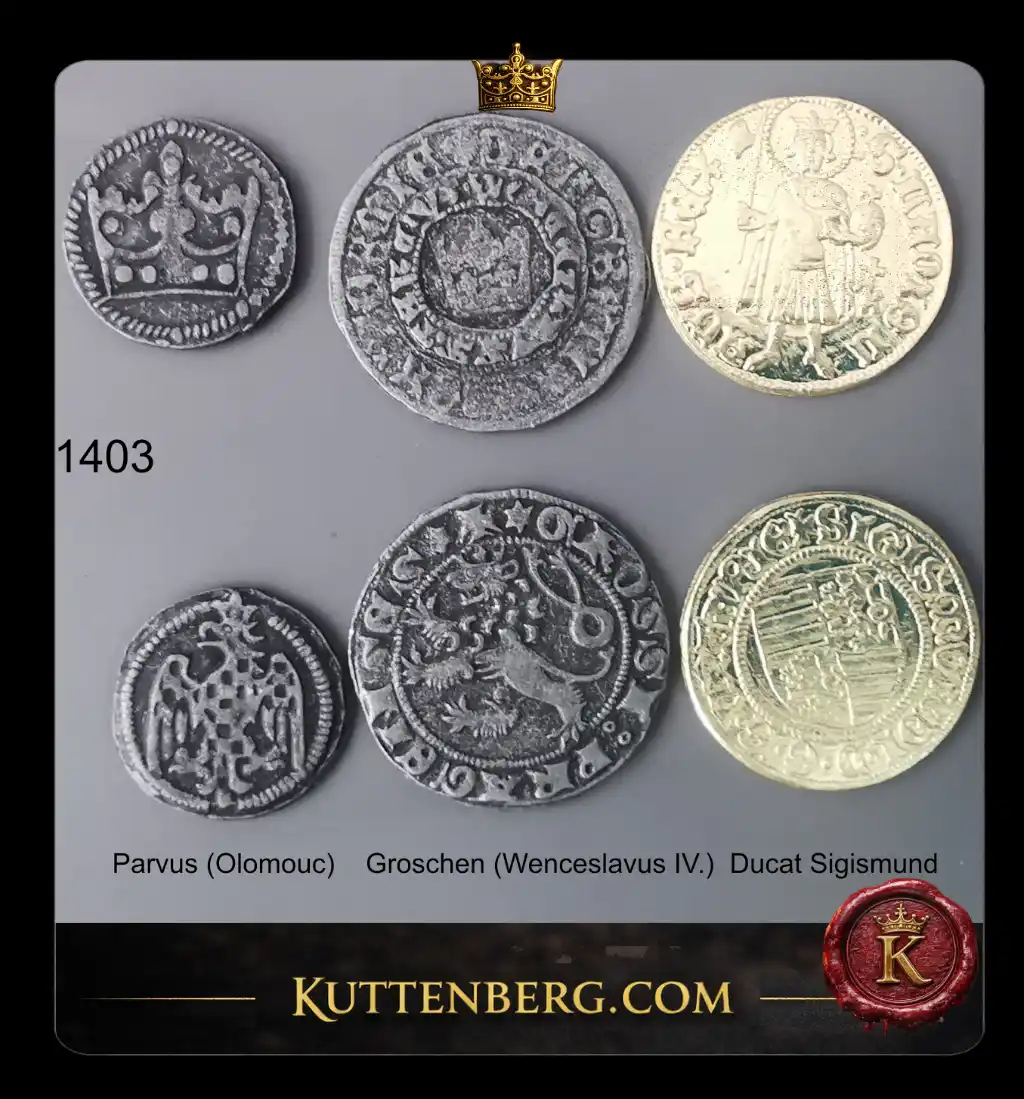
The parvus was a small silver coin of everyday life. The parvus supplemented the Prague grosz, whose value was high and was not practical for small payments. The value of the parvus was therefore set at 12 parvus to one groschen. Parvus was a small silver coin for everyday payments – the Czech equivalent of small denominations such as the German pfennig, French denier or English penny.
While gold ducats were used for large transactions and groschen represented the main currency of the kingdom, people paid with parvus for ordinary purchases at the market, food, services or small crafts.
They were coins that a person carried in a purse every day.
What could be bought with it?
The exact value cannot be determined, but a small coin of a similar type could represent, for example:
- a piece of bread or several loaves depending on the region and season,
- a jug of beer,
- a simple meal in a pub,
- candles,
- a small craft,
- part of the daily wage of a helper.
Its value was small, but indispensable for everyday life.
For LARP, RPG and game economies
Most historical replicas represent wealth – ducats, thalers or groschen.
However, a real medieval person, whether a craftsman, day laborer, merchant or mercenary, spent most of his time in small change.
That’s why parvus is an ideal part of game economies:
- creates a difference between rich and poor characters,
- allows small payments,
- functions as a reward for simple tasks,
- helps create a believable feeling of a real market.
- In addition to the (historical) silver variant, we also have a patinated copper one, which can represent the lowest denomination in the game economy
While the gold ducat is a treasure, the parvus is a coin that people actually use.
Shipping & Delivery
We ship worldwide from Prague (EU).
📦 Shipping cost
Shipping is fixed based on destination.
Because shipping cost is fixed, larger orders offer significantly better value.
🌍 Customs & duties
Orders within the EU are shipped without customs fees.
Shipping to the USA
We ship to the USA via our US partner. Your order is processed locally, no customs, no extra fee, you receive it as a domestic USPS shipment.
All customs handling is taken care of on our side — you won’t need to deal with any customs fees or import procedures.
Canada: No import duties. Local taxes may apply depending on your region.
For other non-EU countries (e.g. UK, Switzerland, Norway), customs charges may apply. We list the goods as “toy parts – metal token for games”, many countries have zero customs duties on them, but we do not guarantee what your customs office will decide.
🚚 Delivery time
Europe: 3–7 business days
USA: 10–14 days
Other countries: varies depending on location
📬 Shipping method
We use trusted carriers (Packeta, DHL, Hermes, Colissimo, GLS, UPS, USPS and other partners by country).
Tracking is provided for all orders.
💡 Tip
Because the real shipping costs are the same for 10 or 100 coins, it is advantageous to order more at once.
Most customers order 30–100 coins to make the most of shipping.
The Last Hope of Olomouc
Olomouc 1428
The wind leaned against the walls and brought with it the smell of wet clay, smoke and thousands of people camped outside the city.
Jan of Sovince stood on the gallery and watched the lights of the enemy fires.
They were everywhere.
In the north.
In the west.
On the way to Brno.
On the way to Litovl.
In all the places where trade, reinforcements or escape could come.
Olomouc was held like a beast in irons.
Below him, the roofs of the city loomed in the darkness.
His city.
The city he swore to defend.
If he had been honest, he would have long ago he knew it was bad.
Very bad.
He had a little over a hundred of his own men in the city.
Experienced mercenaries.
Tough guys.
Most of them had fought since they were young.
And another hundred townspeople.
Butchers.
Blacksmiths.
Bakery.
Honest people.
But an honest person and a good soldier are not always the same.
There were several thousand Hussites behind the walls.
Maybe four.
Maybe five.
No one knew exactly.
More were coming every day.
Jan leaned against the cold stone.
Somewhere in the distance a dog barked.
Otherwise it was quiet.
The worst silence.
The silence of a siege.
The silence in which everyone waits for what tomorrow will bring.
Or if there will be any tomorrows.
“Sir.”
Jan turned.
Mikulaš was coming up the stairs.
One of his officers.
“Two more wagons of grain.”
“What about them?”
“They’ve arrived.”
Jan nodded.
He wasn’t surprised either.
The last few weeks have been one bad news after another.
Grain.
Salt.
Arrows.
Horses.
Everything was disappearing.
Like water in a leaky bucket.
“And the people?”
Mikulas was silent for a moment.
“They’re starting to ask.”
“For what?”
“If help comes.”
Jan looked into the darkness.
He had no answer to that.
He sent the messenger eighteen days ago.
The best rider he had.
A man who knew all the trails between Moravia and Hungary.
If anyone could break through the encirclement, it was him.
But eighteen days was a long time.
Long enough to catch a person.
Or kill them.
Late at night, Jan could no longer sleep.
He sat in the tower above the map.
A candle burned down next to him.
The city below him was silent.
Only occasionally a gate creaked somewhere or the wind howled between houses.
He thought.
How many more days will it last?
A week?
Two?
Three?
Then someone knocked.
Once.
Shortly.
Urgently.
The door opened.
A breathless guard entered the room.
“Sir.”
“What is it?”
“They have arrived.”
Jan stood up.
“Who?”
The guard swallowed.
“I don’t know.”
“What do you mean?”
“They speak some strange language.”
A few minutes later he was descending the narrow stairs to a small side gate hidden between the houses.
It was after midnight.
The city was asleep.
Only a few torches illuminated the wet stones.
A few of his men stood at the gate.
And several horsemen stood against them.
Jan counted about ten.
They were all of smaller stature.
They had fur caps.
Short bows.
Slender, slightly curved sabre.
And horses that looked like they could run all day without resting.
One of the strangers stepped forward.
An older man in expensive clothes.
A face weathered by the wind.
A gray beard.
Dark eyes.
He looked at Jan for a long time.
Then he said slowly:
“Count Jan… ?”
Jan nodded.
The man smiled.
“That makes me happy.”
Then he reached into his jacket.
Jan’s men immediately placed their hands on the hilt of his sword.
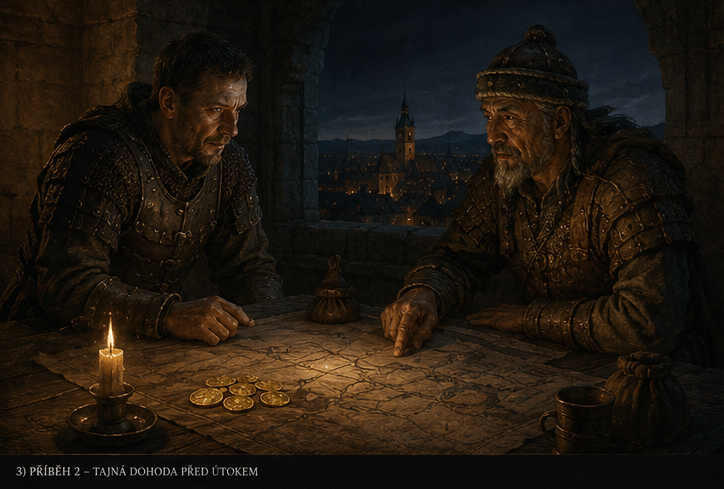
However, the stranger only pulled out a small pouch.
He placed it on the table next to the torch.
A familiar jingle rang out.
Gold.
Jan opened the purse.
Hungarian ducats gleamed inside.
Dozens of ducats.
Maybe more.
The coins caught the light of the flame and glowed briefly.
“What is it?”
The man shrugged.
“Kaiser.”
Jan raised his head.
“Zikmund?”
The stranger nodded.
“Kyldét minket.”
Jan looked behind him. He didn’t understand a word, but it must have been good news.
Into the darkness.
“Wie viele seid ihr?”
“Háromszáz…. Dreihudndert.”
Jan sighed. There were thousands of enemies behind the walls. Three hundred was not an army. Three hundred was the last card in the hand of a player who had been losing for a long time.
How disappointed he was.
“Is that all?” The question slipped out before he could stop it. But the stranger still didn’t understand him. But he understood.
The stranger smiled.
As if the man had read his thoughts.
He tilted his head.
“Dreihundert dobich.”
That sounded better.
But only a little.
They climbed the tower.
John drew a map in the sand on the floor, showing the position of the Hussites.
The patrols.
The wagon walls.
The approaches to the city.
The Cuman commander was silent.
He listened.
He observed.
He occasionally asked a trifle.
Nothing more.
Finally, he placed his finger on one spot.
“Hier”
Jan nodded.
“Yes.”
“Weak.”
“Maybe.”
“No.”
The man smiled.
“That’s for sure.”
Jan looked at him.
For the first time, he realized that the man wasn’t afraid.
Not at all.
As if he didn’t see five thousand enemies.
As if he only saw another problem to solve.
After a while, John pointed to the purse.
“So the emperor paid you.”
“Yes.”
“And that’s why you came?”
The Kuman thought for a moment.
Then he laughed.
“At first.”
John smiled.
“And then?”
The commander looked out the window at the black landscape beyond the walls.
“Then mostly because someone wants to kill us.”
For the first time that evening, Jan actually laughed.
Two men who had not known each other an hour before were planning a joint battle.
One came from the Moravian hills.
The other from the distant steppes.
They spoke different languages.
They prayed differently.
They grew up in different worlds.
And yet they understood each other.
Because they both knew war.
They both knew fear.
And they both knew that they might not survive the morning.
Shortly before dawn, Jan went out onto the walls.
A fog hung over the Hussite camps.
The fires were slowly dying down.
The city was sleeping behind him.
For the first time in many weeks, however, he felt something he had almost forgotten.
Hope.
Not much.
Not a certain one.
Just a small one.
Fragile.
The kind that is born just before dawn.
He felt one of the ducats in his pocket.
He squeezed it in his palm.
A piece of gold from the Kremnica mines.
A coin that struck hundreds miles.
She crossed the mountains.
She crossed the border.
She brought three hundred riders to Olomouc.
And she may have just saved the entire mest.
Footsteps were heard behind him.
The Cuman commander climbed onto the walls next to him.
They stared into the darkness in silence for a moment.
Then the man pointed to the east.
Where the first light was beginning to rise beyond the horizon.
“Good day for battle.”
Jan nodded.
“Let’s hope so.”
The Kuman smiled.
“Van”
Then he placed his hand on the hilt of his saber.
“That’s for sure..”
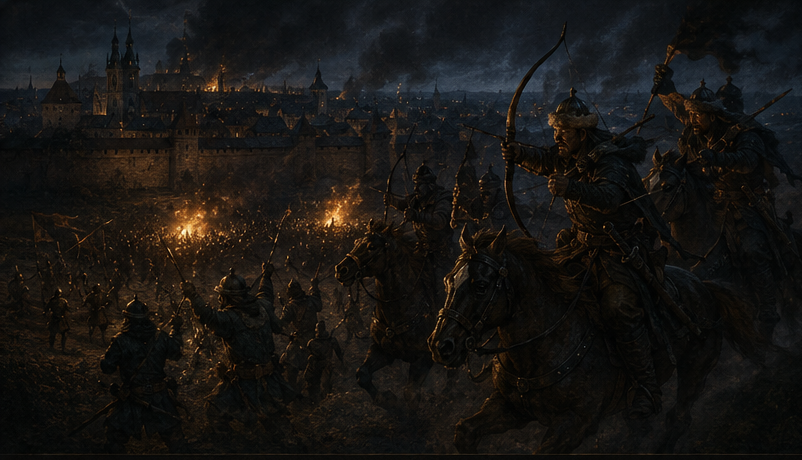
We need to go, in a moment the bells will start ringing down in the city and we need to attack the camp before they wake anyone up.
Identity
Verwenden Sie Silbergroschen als Standardwährung,
Gold für hohe Werte,
patiniertes Silber für Münzen mit niedrigem Wert.
Design
Specifications
Usage
RPG
Brettspiele und andere Spiele
Film- und Theaterrequisiten
Themenmärkte und ähnliche Veranstaltungen
Themen-Kinderlager
FAQ
Is the Parvus coin double-sided?
Yes, all our coins are double-sided. The Prague grosz has a Bohemian lion on the obverse, and a royal crown on the reverse, just like the original.
Is it an exact replica of the original?
No. It is a projection of what the Moravian one might have looked like. The design is a contemporary one from the seal of the lords of Sovince and the Moravian margraves.
What inscriptions are in the circle?
Fidelitas – fidelity
What is the weight of one coin?
Approximately 3 grams.
What is the Parvus coin like to the touch?
Authentic, it is a metal coin.
Can it be used in combat in LARP?
Yes, you can throw it with a slingshot. But we recommend it as a means of payment, not as a weapon 🙂
Is the coin suitable for LARP?
Yes, it is made of a durable alloy and has safe rounded edges.
Is it a replica or fiction?
It is a plausible fiction, this is how coins looked during the time of Wenceslas IV. and the Hussite Wars. Its design uses the medieval seal of the lords of Sovince on the obverse and the Moravian eagle from the seal of the Moravian margraves on the reverse.
Can the coin be used as a gift?
Yes, it is often used as a thematic trinket or collector’s item.
Is the coin magnetic?
No
What is the lifespan of the surface treatment?
It depends on the way it is used, in general – the lifespan is long.
Can the coin be used as real currency or an investment?
No — You can try, but we’re afraid you won’t succeed, it’s been out of circulation for a few centuries 🙂 On the other hand, its current price in the e-shop very approximately corresponds to the value it really had.
This is a replica for games, collecting or as a prop (it is not minted from silver and has no real value as currency).
Safety warning
This coin is not a toy.
Not suitable for children under 3 years – choking hazard (small parts).
Keep out of reach of small children.
Additional safety recommendations
-
The coin is metal and may be heavier than regular plastic tokens.
-
Do not use as a throwing object or impact.
-
Do not chew, do not put in mouth.
-
Not suitable for children under 3 years without adult supervision.
Coin maintenance and cleaning
Routine Cleaning
-
Wipe with a dry or slightly damp soft cloth.
-
If the patina is more pronounced, use a mild soap solution and dry thoroughly again.
-
Do not use abrasives or scouring pads — can damage the surface finish.
What not to do with a coin
-
Do not leave in moisture for a long time (you will extend the life of the patina and the surface).
-
Do not expose to aggressive chemicals (cleaning sprays, acids, acetone, nail polish remover).
-
Do not put in the dishwasher — heat and water pressure destroy the surface finish.
-
Do not leave in salt water (corrosive environment).
-
Do not put in pockets with keys — they quickly scratch the surface.
Long-term storage
-
Store in a dry place.
-
Ideally keep in a bag, box or envelope.
We originally created coins for our games (http://cestycasem.cz), Prague Groschen specially Interregnum 1313 alias Bloody Times http://interregnum.cz
You may also like…
-
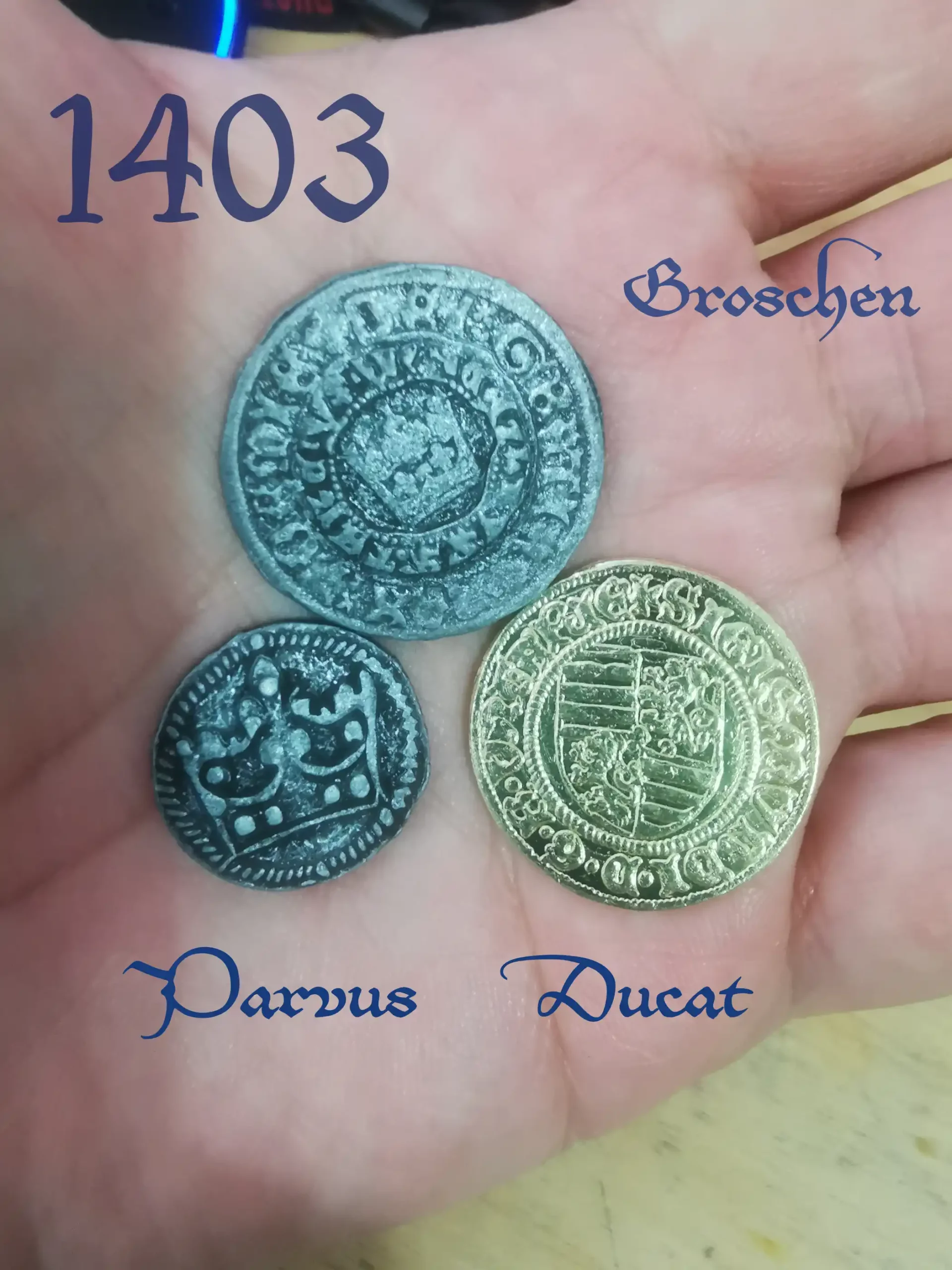
Coins of the Kingdom of Bohemia 1403
Price range: 250,00Kč through 9.750,00KčSelect options This product has multiple variants. The options may be chosen on the product page
Related products
-
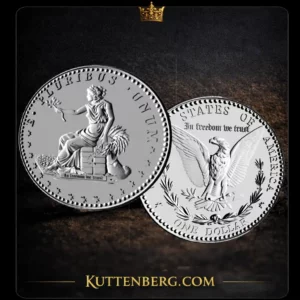
Dollar – Western Dollar – Metal Replica Coin
22,50KčSelect options This product has multiple variants. The options may be chosen on the product pagePricing and sales
Quantity Discount (%) Price 1 - 9 — 22,50Kč 10 - 99 22.22% 17,50Kč 100 - 499 38.89% 13,75Kč 500 - 999 50% 11,25Kč 1,000+ 55.56% 10,00Kč -
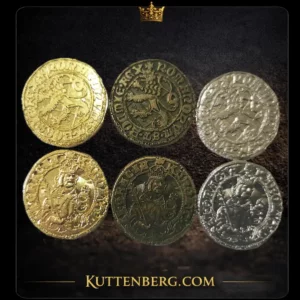
Ducat – Golden Coin of Charles IV
20,00KčSelect options This product has multiple variants. The options may be chosen on the product pagePricing and sales
Quantity Discount (%) Price 1 - 9 — 20,00Kč 10 - 99 25% 15,00Kč 100 - 499 40% 12,00Kč 500 - 999 50% 10,00Kč 1,000+ 53.75% 9,25Kč -
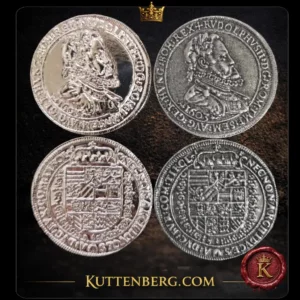
Thaler 1603 – Replica of a Historical Coin
22,50KčSelect options This product has multiple variants. The options may be chosen on the product pagePricing and sales
Quantity Discount (%) Price 1 - 9 — 22,50Kč 10 - 99 22.22% 17,50Kč 100 - 499 38.89% 13,75Kč 500 - 999 50% 11,25Kč 1,000+ 55.56% 10,00Kč -
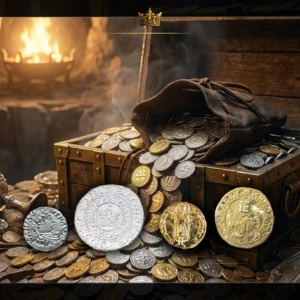
Medieval Royal Treasury – set of medieval gaming coins
Price range: 750,00Kč through 9.250,00KčSelect options This product has multiple variants. The options may be chosen on the product page