Saladin Coins – Metal Replica for Games
20,00Kč
Saladin Coins
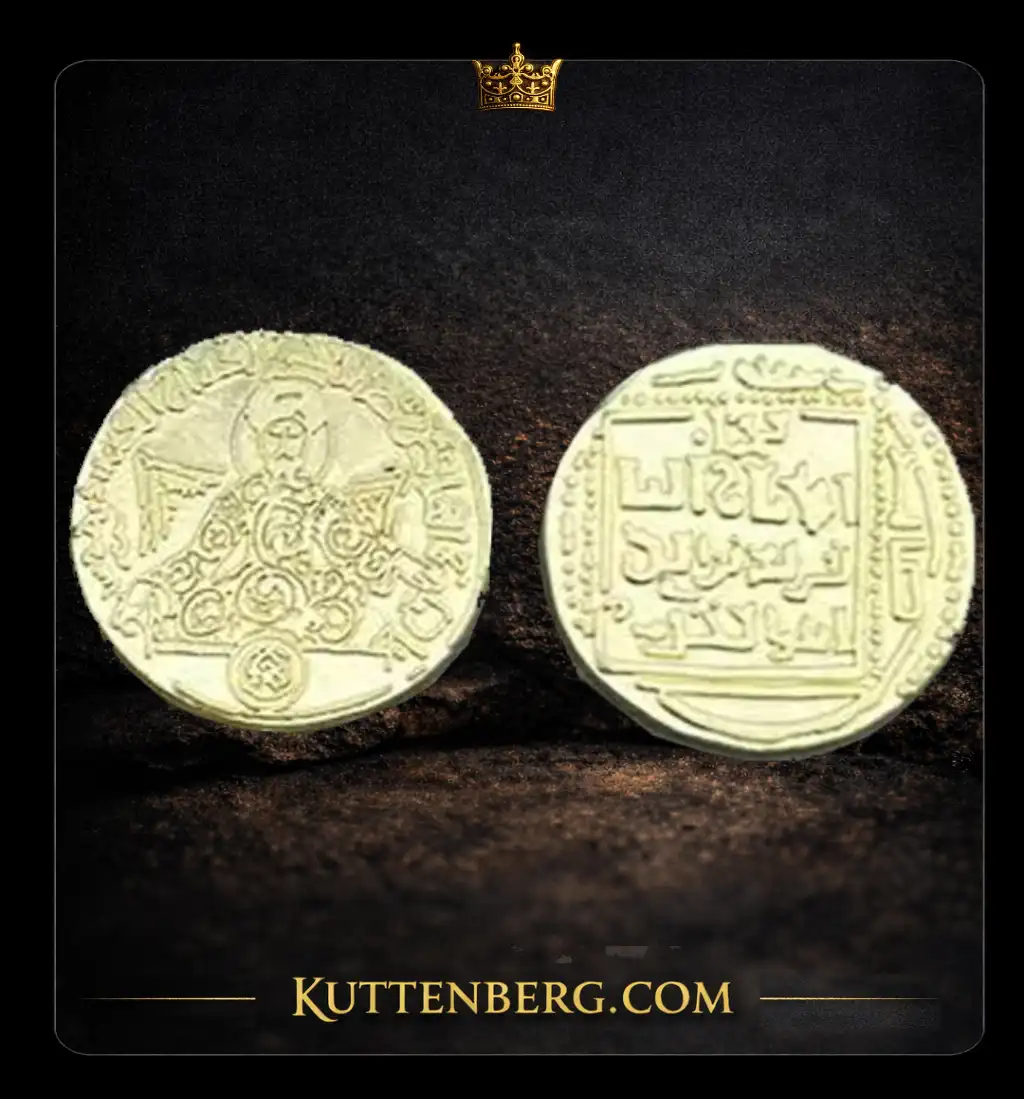
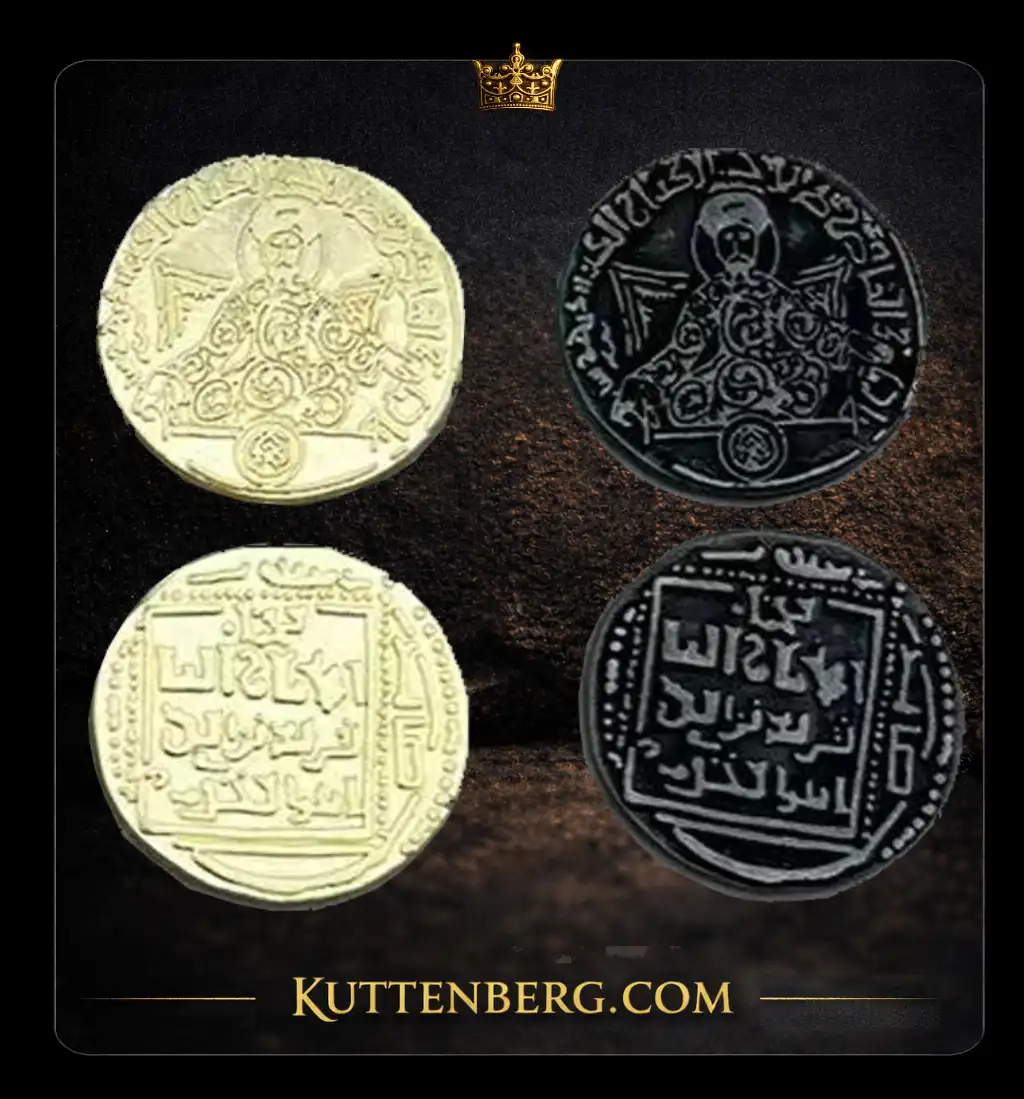
Saladin coins for games, available in gold and patinated silver. Other finishes (bright silver, copper, patinated copper) are possible for larger orders.
Diameter: 26 mm
Material: zinc alloy
This piece is a historical replica, combining the obverse of one coin and the reverse of another from the reign of Saladin. These coins were struck in his sultanate at the end of the 12th century, most likely in Cairo.
Parameter Value
Diameter 26 mm
Thickness approx. 2 mm
Weight approx. 4 g
Material Zinc alloy
Color variants Silver, Gold, Silver patina, Copper patina, Verdigris
Suitable for LARP, RPG, board games, gifts, props, etc.
Who is the coin for
It is a game coin for use in board games, cosplay, larp and rpg, in theater, etc. It is a game coin for use in board games, cosplay, larp and rpg, in theater, etc. It will be used, for example, by LARP players, RPG gamemasters, collectors of fantasy items and fans of epic mythology.
Uses of coin
Suitable as a game currency, trophy, collector’s item or atmospheric accessory to a costume.
Saladin Coins
Saladin coins for games, available in gold and patinated silver. Other finishes (bright silver, copper, patinated copper) are available for larger orders.
Diameter: 26 mm
Material: zinc alloy
This piece is a historical-style replica, combining the obverse of one coin and the reverse of another from the reign of Saladin. These coins were struck in his sultanate in the late 12th century, most likely in Cairo.
The reverse side carries a praise of God, while the obverse is unusual—and even controversial in the Islamic world—as it shows a portrait of Saladin himself. Only a ruler of his stature could afford such a bold departure from tradition.
A coin of power, faith, and legitimacy
Saladin’s coins (Ayyubid dinar / dirham) belong among the most important currencies of the late 12th century. They were minted at a time when Saladin unified Egypt and Syria, reshaping the political balance of the Middle East. Coins were not merely tools of trade—they were instruments of legitimacy and visible symbols of a new order.
This replica combines motifs from two historical coins of the Ayyubid Sultanate. Such an approach is common in modern historical replicas, aiming to capture the characteristic visual language of the period rather than reproduce a single surviving piece.
Typical Saladin coins were primarily epigraphic—dominated by text. They carried religious formulas, the ruler’s titles, and information about the mint and date (in the Hijri calendar). The inscription was not decorative—it was a public statement of political and religious authority.
After taking control of Egypt, Saladin also transformed its coinage. The removal of the Fatimid caliph’s name and its replacement with Sunni legitimacy was one of the most visible signs of regime change. Coins thus document the shift of power as clearly as chronicles.
Figural imagery is less common in Islamic coinage, but regional exceptions existed—and modern replicas sometimes use such elements to make the historical narrative more accessible and visually engaging.
Saladin’s coins circulated widely across the Mediterranean, along trade routes between the Islamic world and Europe, and even touched the economic environment of the Crusader states. They represent a world where trade, faith, and politics were deeply intertwined.
Key facts
- Coins were one of the primary tools of political legitimacy
- Saladin’s coinage reform symbolized the end of Fatimid Egypt
- Islamic coins often function as precise historical documents
- Epigraphic coins allow detailed tracking of political change
- Saladin’s coinage is among the most widespread of the Crusades era
Historical context
Saladin (Ṣalāḥ ad-Dīn, 12th century):
- Founder of the Ayyubid dynasty
- Unified Egypt and Syria
- Defeated the Crusaders at the Battle of Hattin
- Recaptured Jerusalem in 1187
- Built a new and legitimate political order
For Saladin, coins were more than currency—they were propaganda of legitimacy.
Types of Saladin’s coins
Saladin issued:
- gold dinars
- silver dirhams
- copper fulus
Typical features:
✔ religious inscriptions
✔ ruler’s name
✔ titles
✔ mint location
✔ date (Hijri calendar)
Coins as text — and message
Islamic coins are essentially “text objects.”
This means:
- a coin = a religious statement
- a coin = a political declaration
- a coin = legitimacy of rule
- a coin = a medium of communication
Trade and circulation
Saladin’s coins:
- circulated across the Mediterranean
- were accepted beyond the Islamic world
- were tied to long-distance trade
- interacted economically with Crusader states
Saladin vs. Crusader coinage
Coins from the Crusades era represent a unique meeting of two monetary traditions—Islamic and European. Although often in military conflict, these worlds influenced each other economically.
Saladin’s coins follow the Islamic epigraphic tradition. They are dominated by text—religious formulas, ruler titles, and mint information. The coin itself becomes a statement of legitimacy, faith, and continuity.
Crusader coins, on the other hand, follow European visual traditions. They often feature crosses, rulers’ portraits, heraldry, or symbolic imagery. Visual representation plays a much stronger role.
Interestingly, Crusader states gradually adopted Islamic monetary standards. Some Crusader coins imitate Islamic dinars so closely that they can only be distinguished through detailed study. The reason was practical—merchants trusted familiar standards of weight and purity.
This creates a striking paradox: coins of rival civilizations begin to resemble each other—because trade requires trust more than ideology.
Saladin’s coins represent the continuity of Islamic monetary tradition and the legitimacy of a unified sultanate, while Crusader coins show adaptation to the economic realities of the Near East.
Together, they depict a world where conflict and commerce existed side by side.
Summary
Saladin’s coins
- primarily textual (epigraphic)
- focus on legitimacy and faith
- continuity of Islamic tradition
- standard for long-distance trade
Crusader coins
- visual imagery (crosses, rulers)
- European iconography
- gradual adoption of Islamic standards
- hybrid style between two worlds
“Coins of the Crusades era show that even between rivals, a shared language existed—the language of trust in the weight of silver and gold.”
Historical authenticity
Today, we are used to currency that changes regularly, with older coins quickly disappearing from circulation. In the Middle Ages, however, things worked very differently.
Coins often remained in circulation for decades, and it was completely normal for newly minted coins to be used alongside much older ones. For example, Prague groschen were used from the 14th century well into the time of the Thirty Years’ War.
Newer coins were often smaller and contained less precious metal, but older, higher-quality coins did not disappear. On the contrary – they were often valued even more.
In times of crisis, such as the Hussite Wars, minting could stop entirely. The Kutná Hora mint, one of the most important in Europe, was inactive for extended periods, which meant that coins already in circulation continued to be used for many years.
That is why it is historically accurate for different types and ages of coins to appear together in your game world – just as they did in reality.
In use
These coins are actively used in our games (http://akkon1291.com). With use, they naturally acquire wear and patina—making them even more convincing and immersive over time.
Shipping & Delivery
We ship worldwide from the EU.
📦 Shipping cost
Shipping is fixed based on destination.
Because shipping cost is fixed, larger orders offer significantly better value.
🌍 Customs & duties
Orders within the EU are shipped without customs fees.
Shipping to the USA
We ship to the USA via our US partner. Your order is processed locally, no customs, no extra fee, you receive it as a domestic USPS shipment.
All customs handling is taken care of on our side — you won’t need to deal with any customs fees or import procedures.
Canada: No import duties. Local taxes may apply depending on your region.
For other non-EU countries (e.g. UK, Switzerland, Norway), customs charges may apply. We list the goods as “toy parts – metal token for games”, many countries have zero customs duties on them, but we do not guarantee what your customs office will decide.
🚚 Delivery time
Europe: 3–7 business days
USA: 10–14 days
Other countries: varies depending on location
📬 Shipping method
We use trusted carriers (Packeta, DHL, Hermes, Colissimo, GLS, UPS, USPS and other partners by country).
Tracking is provided for all orders.
💡 Tip
Because the real shipping costs are the same for 10 or 100 coins, it is advantageous to order more at once.
Most customers order 30–100 coins to make the most of shipping.
Saladin and the Merchant
The tent was quiet, but not empty. Outside, the market could be heard — voices, animals, metal that rings the same in every language.
The merchant placed a small pouch on the low table. He was not nervous. Just careful.
Saladin sat opposite him, watching his hands rather than the goods.
“From Damascus,” said the merchant. “Glass, fabrics, dyes.”
Saladin nodded.
“And the price?”
The merchant poured out a few coins. Gold. Familiar.
“This is what the Franks pay with,” he said.
Saladin picked one up and turned it between his fingers. The cross was clear. The weight was right.
“And do they accept ours?” he asked.
The merchant smiled slightly.
“When they are good.”
Saladin reached into his own pouch and placed a dinar on the table. Text instead of image. A different language, the same metal.
The merchant placed both coins side by side and watched them for a moment.
“People are different,” he said at last. “Coins, less so.”
Saladin smiled, almost imperceptibly.
“Trade is more patient than war,” he said.
The merchant nodded. The coins disappeared back into the pouch — together.
Outside, the market continued, as if the world were not divided.
Because sometimes civilizations collide.
And sometimes, they simply compare the weight of gold.
The market
Later, no one asked where the coin had come from.
Not the spice seller.
Not the money changer.
Not the porter carrying sacks through the dust.
They weighed it.
They tested it.
They accepted it.
A coin passed from hand to hand, crossing languages, borders, and beliefs without hesitation.
Because trust does not follow flags.
It follows weight.
It follows metal.
It follows what can be held, tested, and known.
And in that moment, the world was simpler than the wars that divided it.
Not united.
But understandable.
Measured in gold.
Identity
Verwenden Sie Silbergroschen als Standardwährung,
Gold für hohe Werte,
patiniertes Silber für Münzen mit niedrigem Wert.
Design
Specifications
Usage
RPG
Brettspiele und andere Spiele
Film- und Theaterrequisiten
Themenmärkte und ähnliche Veranstaltungen
Themen-Kinderlager
FAQ
Is the coin double-sided?
Yes, all our coins are double-sided.
Is it an exact replica of the original?
Yes, it is based on the real appearance of the historical coins.
What is the weight of one coin?
Approximately 10 grams.
What does the coin feel like?
Authentic, it is a metal coin.
Is the coin suitable for LARP or RPG?
Yes, it is made of a durable alloy and has safe rounded edges.
Is it a replica or fiction?
It is a fairly faithful historical replica created in real size based on a real coin from the time of emperor Rudolf II.
Can the coin also be used as a gift?
Yes, it is often used as a thematic trifle or collector’s item object.
Is the coin magnetic?
No
What is the lifespan of the surface treatment?
It depends on the way of use, in general – the lifespan is long.
Can the coin be used as real currency or an investment?
No — You can try, but we are afraid that you will not succeed, it has been withdrawn from circulation for a few centuries 🙂
This is a replica for games, collecting or as a prop (it is not minted from silver and has no real value as currency).
Safety Warning
This coin is not a toy.
Not suitable for children under 3 years – choking hazard (small parts).
Keep out of reach of small children.
Additional Safety Recommendations
-
The coin is metal and may be heavier than regular plastic coins tokens.
-
Do not use as an object for throwing or hitting.
-
Do not chew, do not put in mouth.
-
Not suitable for children under 3 years without adult supervision.
Coin maintenance and cleaning
Common cleaning
-
Wipe with a dry or slightly damp soft cloth.
-
If the patina is more pronounced, use a mild soap solution and dry thoroughly again.
-
Do not use abrasives or scouring pads — they can damage the surface treatment.
What not to do with a coin
-
Do not leave in moisture for a long time (you will extend the life of the patina and the surface).
-
Do not expose to aggressive chemicals (cleaning sprays, acids, acetone, polish remover).
-
Do not put in the dishwasher — heat and water pressure destroy the surface finish.
-
Do not leave in salt water (corrosive environment).
-
Do not put in pockets with keys — they quickly scratch the surface.
Long-term storage
-
Store in a dry place.
-
Ideally keep in a bag, box or envelope.
Related products
-
Prague Groschen – metal game replica coin
21,25KčSelect options This product has multiple variants. The options may be chosen on the product pagePricing and sales
Quantity Discount (%) Price 1 - 9 — 21,25Kč 10 - 99 23.53% 16,25Kč 100 - 499 38.82% 13,00Kč 500 - 999 50.59% 10,50Kč 1,000+ 54.12% 9,75Kč -
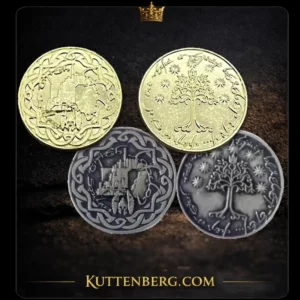
Celestar – Coin of the White City
20,00KčSelect options This product has multiple variants. The options may be chosen on the product pagePricing and sales
Quantity Discount (%) Price 1 - 9 — 20,00Kč 10 - 99 25% 15,00Kč 100 - 499 40% 12,00Kč 500 - 999 50% 10,00Kč 1,000+ 53.75% 9,25Kč -
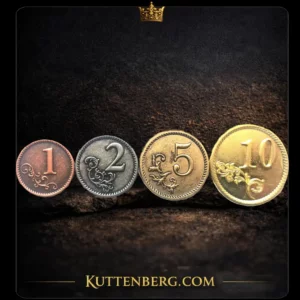
Coins tokens – universal coins for games
Price range: 18,75Kč through 21,25KčSelect options This product has multiple variants. The options may be chosen on the product pagePricing and sales
Quantity Discount (%) Price 1 - 9 — 21,25Kč 10 - 99 23.53% 16,25Kč 100 - 499 38.82% 13,00Kč 500 - 999 52.94% 10,00Kč 1,000+ 54.12% 9,75Kč -
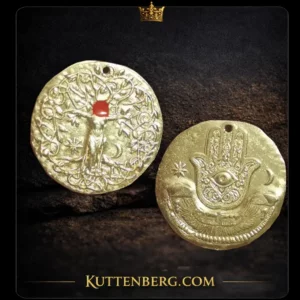
Ashera The Heavenly Mother
Price range: 20,00Kč through 200,00KčSelect options This product has multiple variants. The options may be chosen on the product page